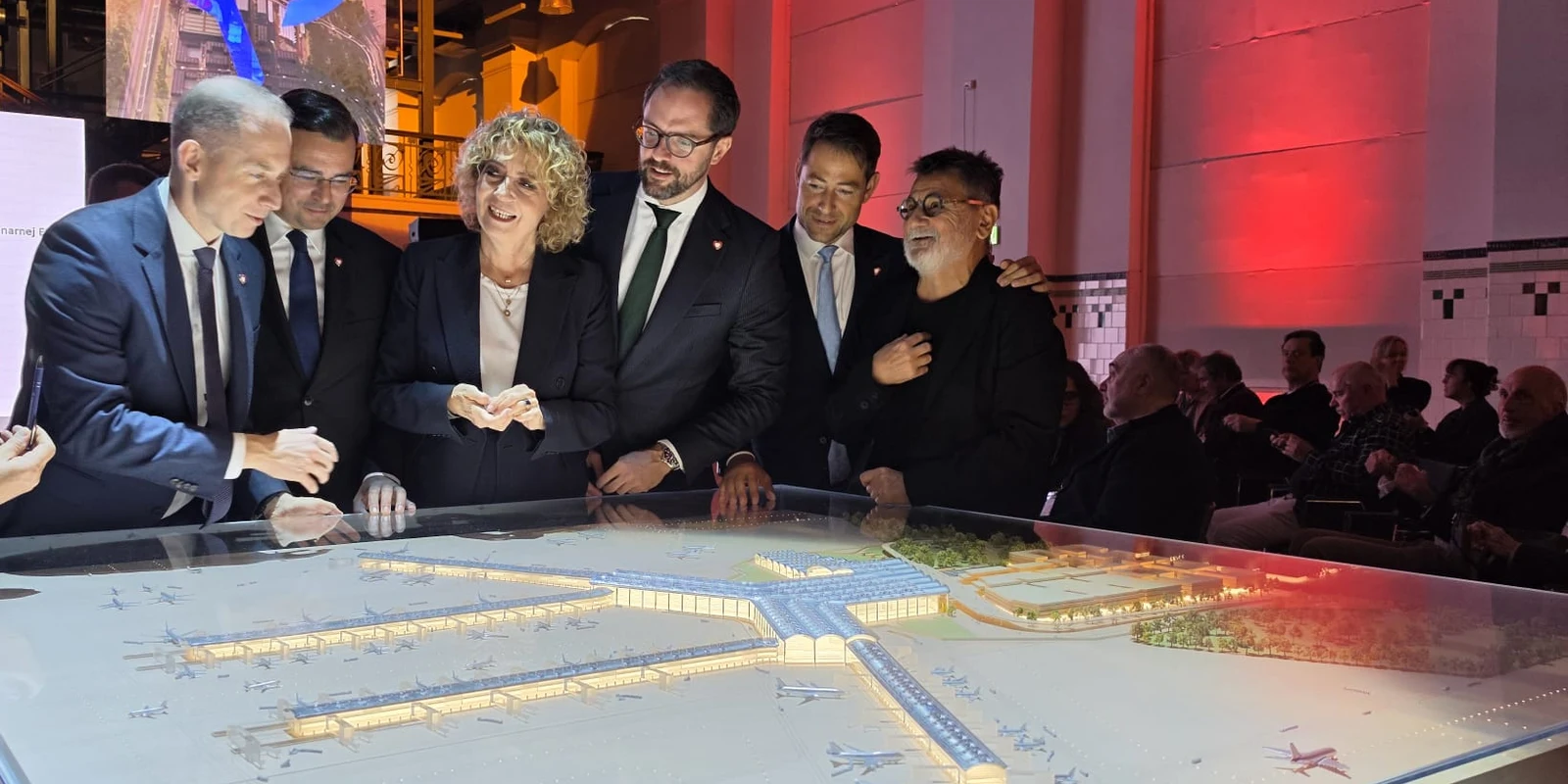
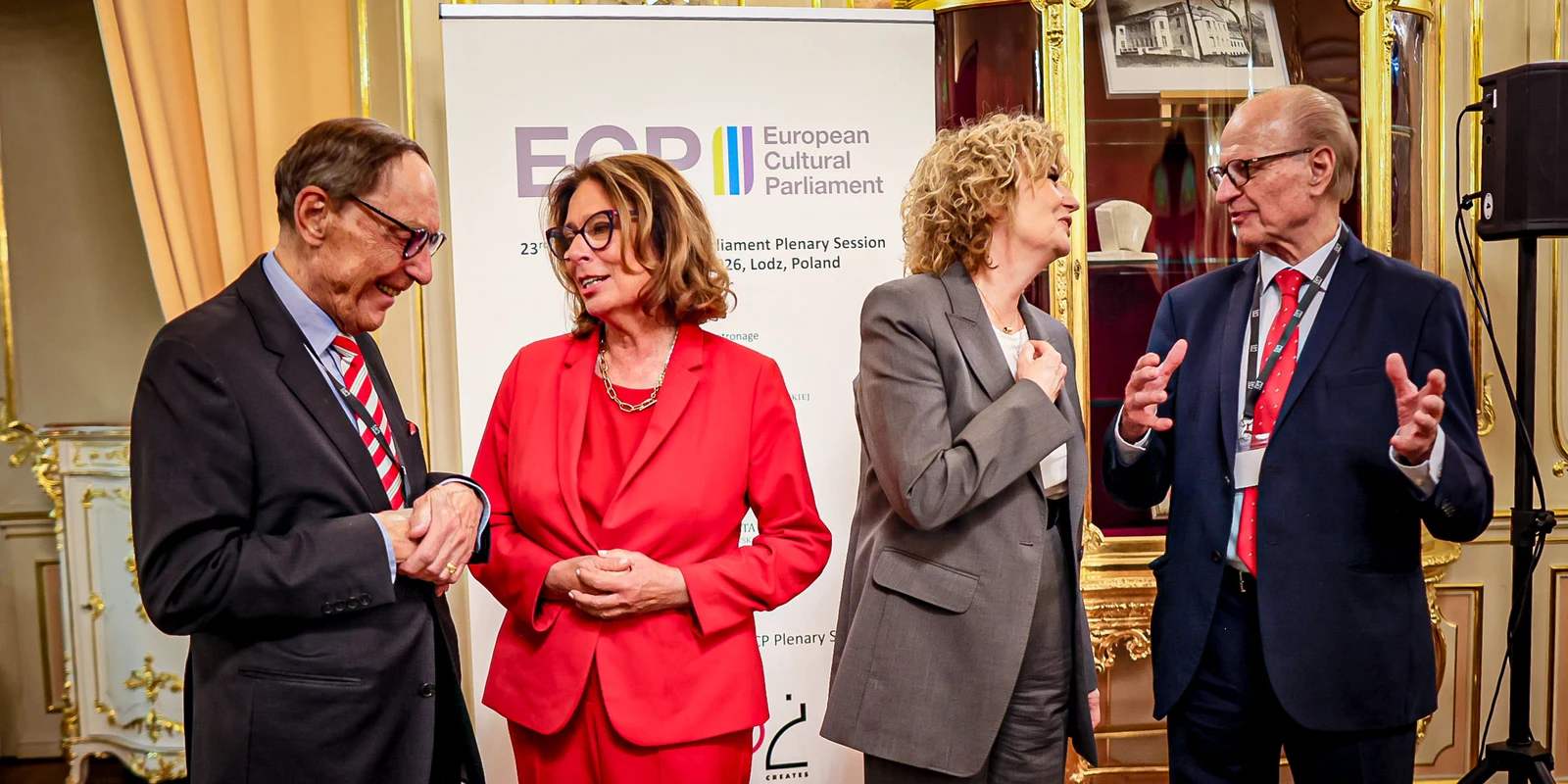
Today, the European Cultural Parliament’s deliberations moved to EC1. After the morning sessions and group work, ECP participants, ministers, city representatives and invited guests gathered around the scale model of CPK. From the very beginning of the conversation about the New Centre of Łódź, we have been asking what happens to a city when its connections with the rest of the country and Europe change. That is why we look at this project from a very specific place: Łódź. Not only where the airport will be built and which routes the trains will take, but what this means for the city. Will Łódź’s central location finally become more than a point on the map? How will the relationship between Łódź and Warsaw change? And what role can Łódź carve out for itself in this new network? Today, ECP
Yesterday, the Łódź session of the European Cultural Parliament opened at the Academy of Music. Representatives of the cultural sector from across Europe arrived in Łódź, and the gathering was also attended by Marshal of the Senate Małgorzata Kidawa-Błońska and Mayor of Łódź Hanna Zdanowska. This year’s discussions focus on cultural identity and how contemporary audiovisual culture is changing the way we understand ourselves, our communities and our own place in Europe. This question takes on particular significance today: images reach us not only through cinema, television and cultural institutions, but above all through platforms and algorithms that decide what we see every day. In the beautiful interiors of the Academy of Music in Łódź, the conversation therefore concerned not only
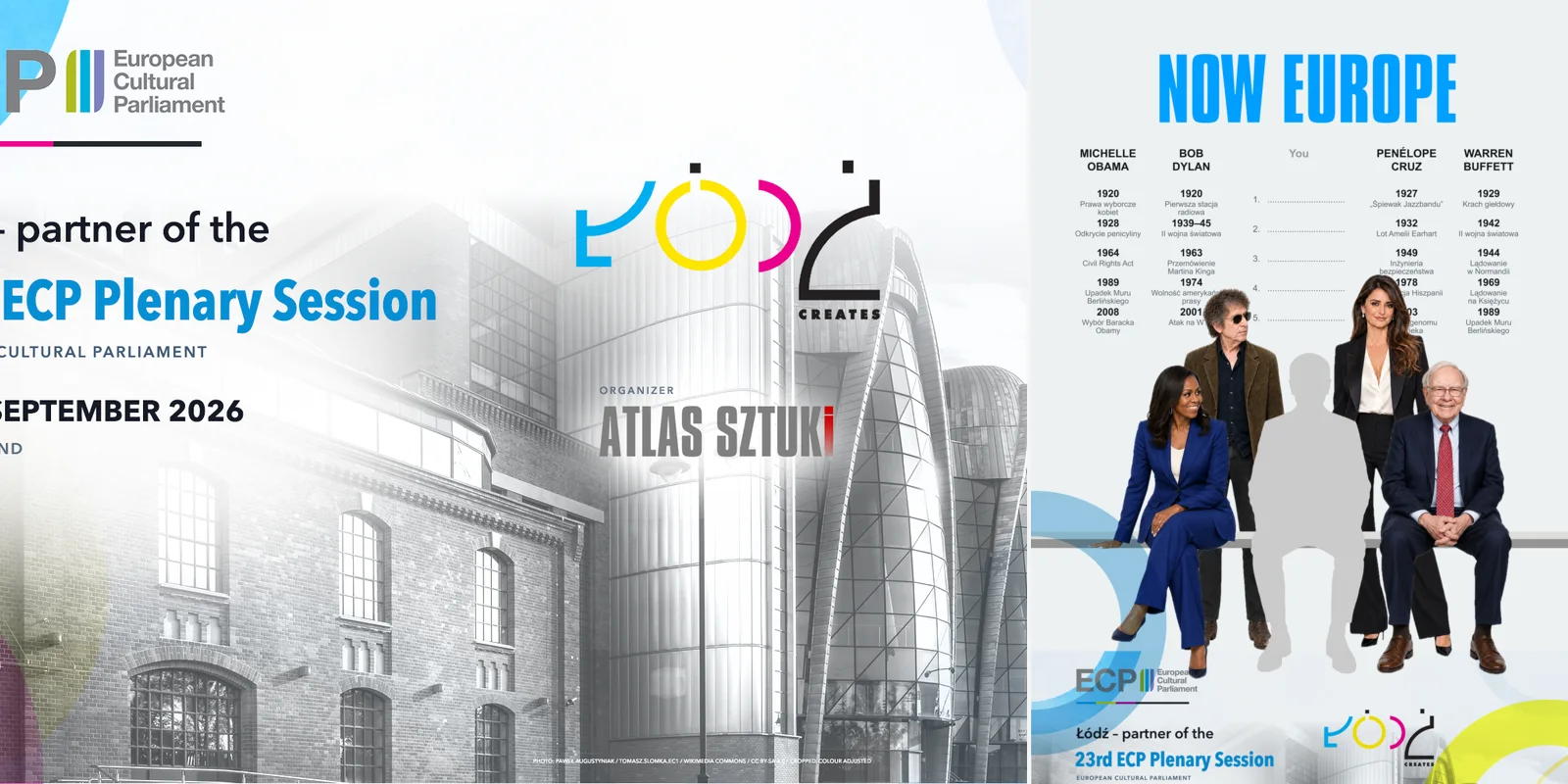
From 11 to 13 September, Łódź will host a closed plenary session of the European Cultural Parliament (ECP) – an independent forum bringing together prominent European figures from culture, art and the debate on Europe’s future. All participants in the session will sit on our bench – The Bench, a new Atlas Sztuki project. Each has chosen five dates between 1926 and 2026 that, from their perspective, were of particular significance to the past hundred years. We have already collected the first sets of dates from people in different parts of the world. Now it is Europe’s turn – to offer its own perspective on the events that shaped the past century. We will use these choices not only to tell the story of the past. They will allow us to begin working with young people on the future – on what
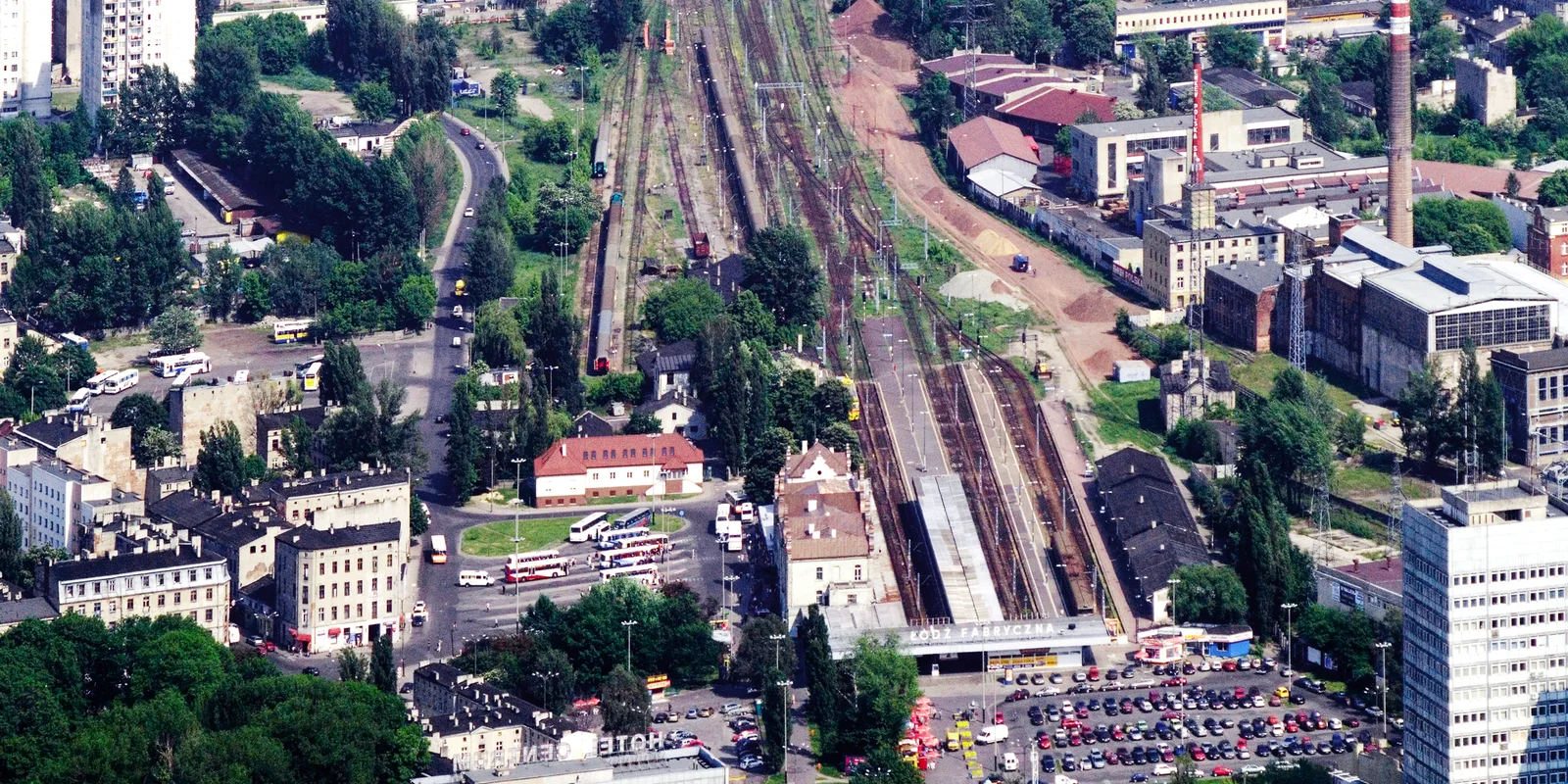
The old station, EC1 before renovation, and a part of the city that was only just about to undergo a major transformation. But from the beginning, it was about more than redeveloping a few dozen hectares. The New Centre of Łódź was intended to prepare the city for an entirely new role – Łódź connected by high-speed rail to the most important centres in Poland and Europe, as well as to the planned central airport. That is why, when we talk today about CPK, Port Polska and High-Speed Rail, it is worth looking at Łódź Fabryczna in 2006. This photograph reminds us what great changes look like before they become reality. Today, another chapter of the same story is opening for Łódź. Port Polska and the new network of high-speed rail links may turn the city’s central location from a mere point
Nineteen years ago, when the idea of the New Centre of Łódź was taking shape, thinking about the city did not stop at its administrative boundaries. Łódź was to become part of a new transport network for Poland and Europe – with a rebuilt Łódź Fabryczna railway station, high-speed rail links running east and west, and access to the planned central airport. It was a vision of a city making use of its exceptional location: not ‘in between’, but at the centre. Today, nearly two decades later, continuing that vision may determine Łódź’s future position – whether the city seizes its historic opportunity and becomes one of the most important transport hubs in this part of Europe. This is why it is especially significant that, at the invitation of Atlas Sztuki, a model of CPK will be unveiled in
And the world received a great deal from him. For one playful moment, Łódź had him too. It had a wonderful Master. Lynch reimagined us; he reimagined the centre of Łódź. Amid the factory ruins, he found a mystery that inspired his imagination. ‘Extraordinary relics of the Industrial Revolution! Today there are hardly any places like this left. Łódź has a soul. That is why I came to like it so much’—several years after the opening of his exhibition at Atlas Sztuki, David Lynch remained impressed by his first visit to the city, with which he had ‘fallen in love in an instant’. These words became forever inscribed in the heart of the city. Today we bid farewell to David Lynch, but not to his presence. In these factories, in these images, in every inspiration that fills the spaces of Łódź
It doesn’t have to be wooden or ergonomic, as long as it’s sturdy, leans against the edge of the frame and leads somewhere higher, whatever that means. Of course, a ladder comes in very handy when we are just talking on the phone and our conversation is with someone, or something at a distance and promises to be exceptionally long. Abstractions formed on the ladder cannot be verified, ideas „talked about” on the ladder cannot be embodied – they remain interesting delusion. Delusions are very much needed by Homo sapiens as a natural habitat through which our species maintains its superiority over other primates. Even more than for conversation, we need delusions that can be turned into an image, into a possibly simple, intuitively usable object or tool. Of course, both colour and tools can
It is always juicy and green, like the grass on a football pitch. The opening of the new building of the Museum of Modern Art in Warsaw has been going on for a few days now. From the point of view of Łódź, it is time to return to the noble cultural and even sporting “rivalry” between ideas as immanent to both cities as Legia on the one hand and ŁKS and Widzew on the other. Łódź does not stand a chance. Well, we wish our colleagues from the capital all the best and look forward to the opening whistle when the several days of celebrations are over. Given the centrality of the country’s financial flows on Poland’s sandy, absorbent soil (not least because of that fatal split in its own identity, Bałuty semper contra Widzew), do you think this is too trivial a view of “high” culture? You’d be
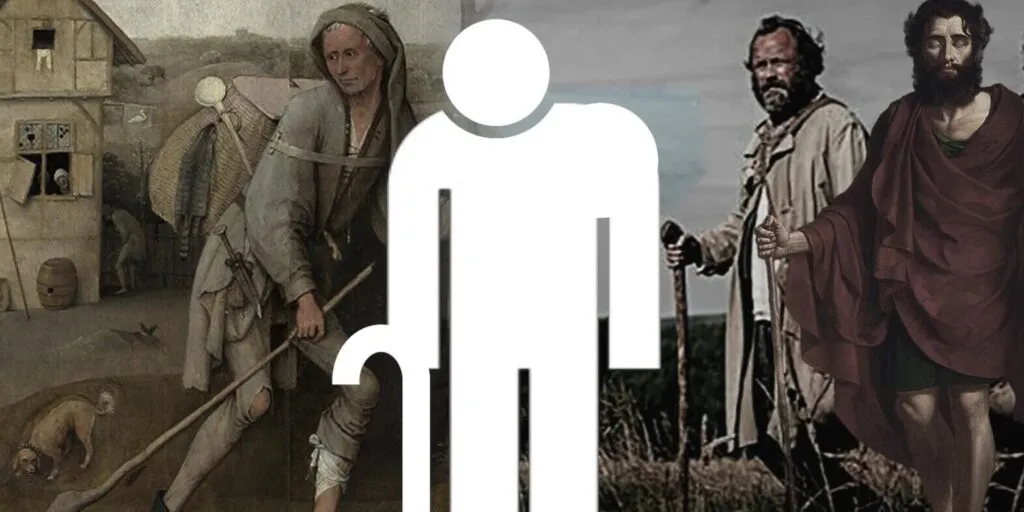
In an age where technology reigns supreme, the outward expression of disquietude takes the form of subtle, impartial cosmetics on a countenance that exudes indifference. The two figures depicted in the photograph are united by a number of factors, including bipedalism, age and employment at the same advertising agency. There is much more to us than meets the eye. At least, we would like to believe that we are more than the sum of our parts. Both they and we have many more similarities than we realise. This is what the optimistic thinkers posit. We need this kind of discourse, we need everyone whose intuition whispers that we will succeed in weaving together and unravelling the complex networks of connections between us, so that our gaze does not become lost in them, so that it reaches
We have lived continuously in a civilisation and culture that has developed harmoniously since at least the beginning of the modern era. It is an energetic civilisation, fascinated by the possibilities offered by technology and the pragmatically applied rational gift of categorising and ordering everything it encounters. When we try to confirm such a coherent, simple story in images, things get complicated. Let us try to juxtapose two allegorical images, i.e. images that reveal the essential features of some action. It will not be, for example, the human tendency to talk, to chatter, to communicate. Let us take the ancient allegory of “Talkativeness” from Cesare Ripa’s late 16th century work “Iconologia” (for the first illustrated edition of 1603). Ripa writes of it as follows: “A young
There is no need for symbols. But what are we to do, stuck far from the rushing currents in the relentless tide of information? So let’s focus on symbols for a moment. They carry more meaning than “the latest information”. The motif of death in water runs from Psalms 69 to T. S. Eliot’s The Waste Land . “Phlebas the Phoenician, a fortnight dead, Forgot the cry of gulls, and the deep seas swell And the profit and loss”. (Part IV. Death by Water ) The catastrophic imagination needs neither facts, nor statistics. It is the projection of a soaked, flooded soul. May no facts this time try to throw their two cents to the sad tradition of aquatic motifs unnecessarily. Psalm 69 speaks of despair, of misery, of grief. “God, God, save me! I’m in over my head. Quicksand under me, swamp water over
That is not a bad sign. Better to be interested in drawing bold new lines freely than in building fences and sealing old borders. Since it is going well, let us draw ourselves a city before the next meeting. A whole City : a comic (and the game built around it) is a good medium for such far-out, spur-of-the-moment ideas. Everyone lives somewhere, knows the nearest corner, courtyard, corridor and hallway, and knows something about their dream of the most distant galaxies. Corner, courtyard, corridor and frame are concepts that can be translated into one another across space. For now, let us not worry about the galaxy. Let us simply try to begin with what is close and familiar. Goodness, it may be very strange at first—we know little about ourselves. And if it ‘works’, if it proves
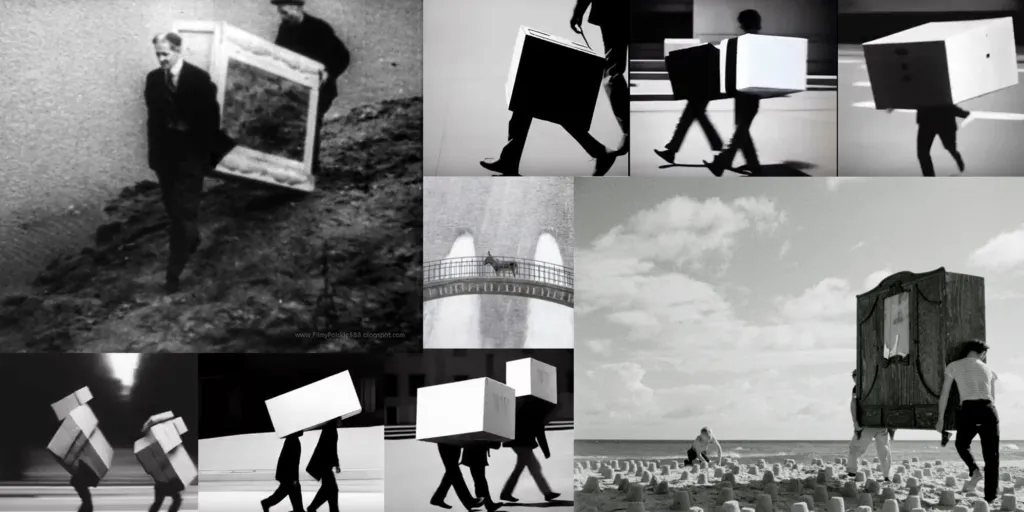
One of the few avant-garde films preserved from the interwar period (from 1937), i.e. those that wanted to convey the unnoticed obviousness is The adventure of a good man ( https://www.youtube.com/watch?v=FlaFGPiioPQ ), written by Stefan and Franciszka Themerson, with music composed by Stefan Kisielewski is worth a moment of attention. The plot backwards, about the consequences of a good-natured official walking backwards, exposes the motif of two people wearing a cabinet with a mirror (yes, yes, Henryk Kluba and Jakub Goldberg dragging a wardrobe on the Baltic beach in Polański's 1958 etude, it was already the "second season" of this symbolic transport service in the history of the film). Will we live to see the third season and the motif carrying something as big and heavy as a wardrobe
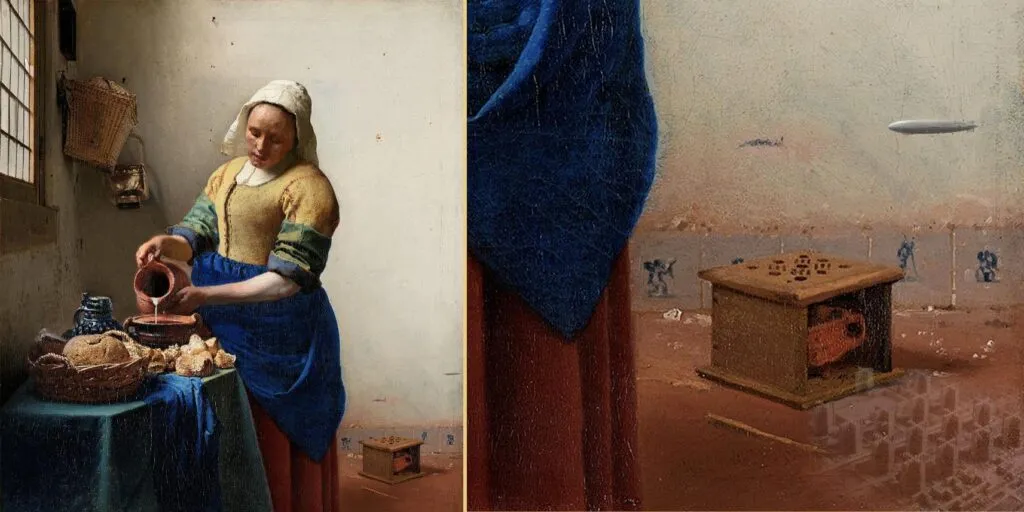
One might inquire as to the location of Drohobych or Delphi. It is not possible to ascertain what the name was for the one that Vermeer saw around 1657-1658. If we accept the expert opinion (which is not always reliable in the case of paintings), we can discern a foot warmer in the lower right corner, situated next to a row of five cobalt-decorated, distinctive Delft tiles. One might inquire whether Schulz would have been disinterested in such a fetish. The suggestion of a connection between the kitchen and the alcove is so subtle that it is not discernible in the living room. It is evident that the wall and floor in question occupy a considerable portion of the painting, with the tiles spanning approximately twenty centimetres in width. This is in stark contrast to the limited
The precise details remain elusive. It is established that Andrzej Wróblewski was an accomplished painter. Given the artist’s reputation, it is unsurprising that an exhibition of his work was held in the heart of Venice, specifically within the Procuratie Vecchie in St Mark’s Square. This is one of two Polish exhibitions at the 60th International Art Exhibition in Venice. The main exhibition was curated by Adriano Pedrosa, the Brazilian artistic director of the São Paulo Museum of Art (MASP). “Andrzej Wróblewski is our great legend, and it is our hope that he will become, if not a legend for everyone, then at least a recognisable figure on the international art scene.” It is not guaranteed that this will come to fruition. In a conversation with Agnieszka Kowalska conducted in 2012 on the
One of the few surviving avant-garde films from the inter-war period (from 1937), i.e. films that sought to convey the unseen obvious, is Przygoda człowieka poczciwego ( The Adventure of a Kind Man ), https://www.youtube.com/watch?v=FlaFGPiioPQ by Stefan and Franciszka Themerson, with music composed by Stefan Kisielewski. The backwards plot, about the consequences of a good-natured clerk walking backwards, reveals the motif of two people carrying a wardrobe with a mirror (yes, yes, Henryk Kluba and Jakub Goldberg lugging a wardrobe along a Baltic beach in Polanski’s 1958 etude, that was already the „second season” of this symbolic transport service in film history). Will we see season three, and will the motif of carrying something as big and heavy as a wardrobe fill the frames and our
What happens to sensitives and momma’s boys from a good home when they watch war with their sharp, ten-year-old eyes? They grow up to be tough cynics . In 1958, shortly after receiving the Publishers’ Prize, Hłasko, then aged 24, gave the following interview to Polish Radio: „Madam, a man is born without his will, then lives without pleasure, dies without his will. Is this such a cheerful story, I don’t know? (…) I’m not a cynic, (…) it’s life.” If it turns out badly we will get not only a couple of films, but also a TV series about Hłasko. One might cite, for example, Hłasko 1670 . A bit of costumes, a bit of disguise, a lot of issues to the camera, straight to the eye, some cinematic dialogue „just like from Hłasko”. The subtly glinting cynicism on the screen represents a highly
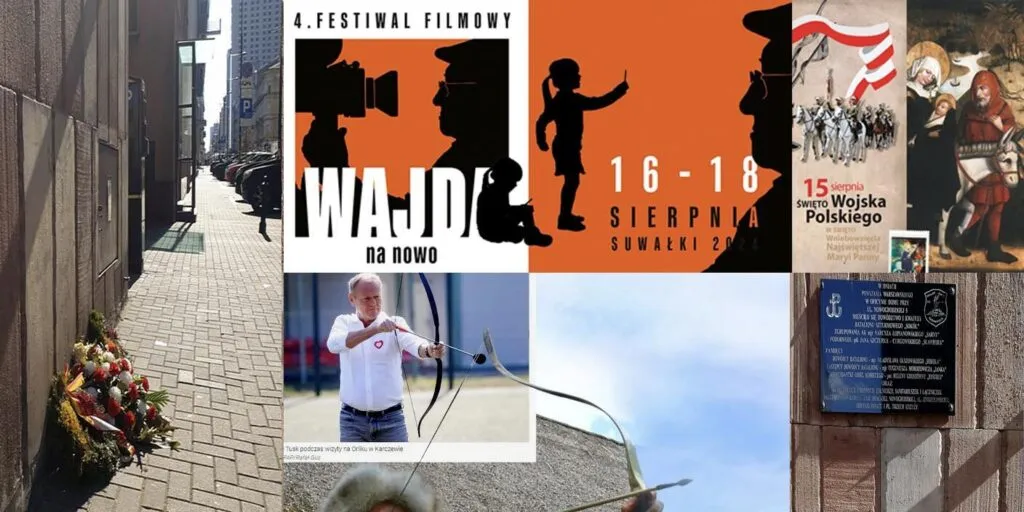
Like the proverbial dog to the hedgehog. As part of this project, we ask the world's famous people for five important dates from the last century. For what? Probably to give a head for a moment (during the Games) about the world that awaits us in a hundred years. It is difficult to predict how the fate of our project will be further. We are going to collect dates, as well as books, such as movie scenes on 5inLodz, as well as photos describing the World of Cities on 6inLodz.pl. It's the middle of August, so let's collect five dates from the last days. Is it possible to read anything from them? 1 – Let's start with the August street. Theoretically, we know very well that the street is a complex structure, woven from a whole series of completely different systems of signs and symbols. This
It is evident that the human imagination tends to conceptualise inhuman powers in a relatively straightforward and consistent manner. The Climax by Aubrey Beardsley, Aris (Daryl Hannah), the replicant „basic pleasure model”; Blade Runner (1982), by Ridley Scott, iPhone, 2021
But now you are laden with the judgment due the wicked; judgment and justice have taken hold of you. Be careful that no one entices you by riches; do not let a large bribe turn you aside.” – Siri! Please tell me another story. Grandfather has gone somewhere… On 28 September 2023, the day of its premiere, “The Harvester” was the number one feature film in fourteen countries around the world. Before dismissing the universal significance of Tadeusz Dołęga-Mostowicz’s writing, it is instructive to examine the historical context. In this relentless pursuit of progress, we are the slowest to alter the narratives that are repeated ad nauseam. This is what unites us, this is what gives us hope. Is it the unbearable monotony of repetition, of memory, that unites us? Indeed, that is precisely what
According to Tadeusz Markowski, a professor at the Interdisciplinary Centre Studies Municipal University of Łódź, the duopolis process is already underway. Warsaw is growing in the direction of Łódź. Warsaw residents already live in Żyrardów. Perhaps they want to live in the New Centre Łódź? Especially since the prices of apartments in Łódź are much lower than in the capital. Everyone has already spoken on this topic, and years ago. Enthusiasts, cautious and skeptics have spoken out. You can scroll these statements in any direction ( https://plus.dzienniklodzki.pl/ Duopolis -Begins-to-create-in-our-eyes/ar/c3-14710965 ; https://pdm.irmir.pl/narzedziownik/lad-przestrzenny-i-urbanistyka/duopolis-lodzi-i-warszawy ), although you will admit that we are right that we have not yet seen a
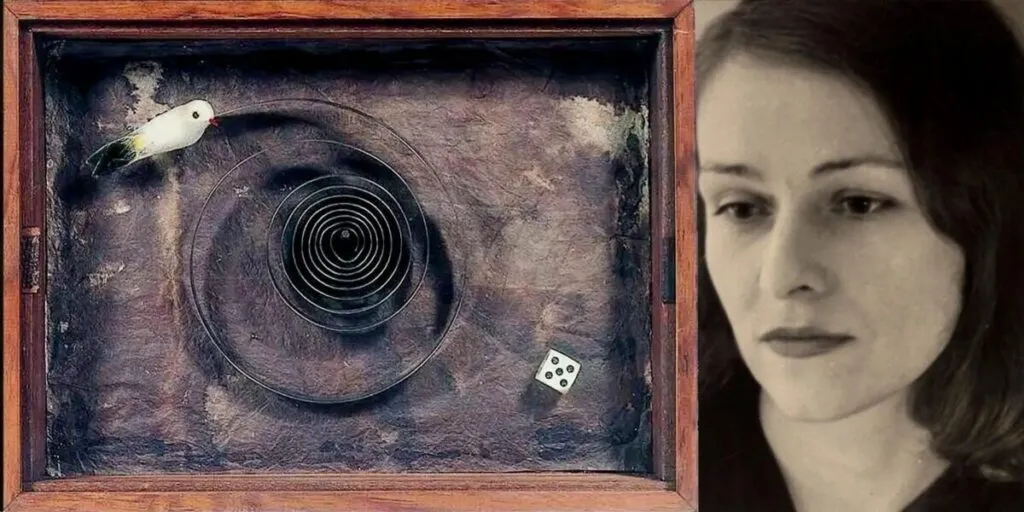
Marcel Duchamp, both Man Ray and Joseph Cornell, also André Breton, did „this kind of thing”. The greats of 20th century art. We will, however, turn to a female biography. Born in 1906, Elisa Latte Elena Bindhoff Enet lived more than one life. In the first, she was a pianist and the wife of a politician. In the latter, already in earthly paradise in the USA, she was the (third) wife of André Breton and one of the most charismatic artists of the Paris Surrealist group after the Second World War. She became Elisa, someone who could fit the unspeakable into a small box. Given the size of today’s parcel network, this ability is invaluable. Elisa Breton died in 2000, before the sense of the world’s pixelated modularity had gone global and the market for delivering anything to the nearest
Indeed, the opportunity to view such paintings is frequently the reason for planning a trip or holiday. In the present era we do this with a mobile phone in hand, with access to a plethora of pages that explain the paintings in question in great detail, suggesting where to look, from what angle, and how to appreciate the painted world. Such prompts will probably be with us forever, unless the power goes out. As long as we retain our own feelings, our own casual glances, our own opinions, everything is fine. The term „older paintings” is used to describe those works of art that have been created prior to the advent of the contemporary iconosphere of mass culture. Such paintings are those of Rene Magritte, whose motifs have become ubiquitous in popular culture. Magritte’s work often employs
The film for which Jan received an Oscar was entitled Dreamer . It is noteworthy that Jan Andrzej Paweł Kaczmarek has received numerous other awards, to the extent that it may appear that he has received every possible honor. Awards are always “for something,” for past achievements. One becomes a star “for something”, which in this case is Memory, which means the Future. In this manner, Łódź demonstrated respect and care for the continuity of culture. This is how Łódź remembers. Great creators are our future. For us, Jan Kaczmarek will always be one of them. He is the one who, in the unanimous opinion of the city and ourselves, deserved his own peculiar, seemingly flat star – like a Łódź sidewalk. Last year he celebrated his 70th birthday – he was born in Konin, and grew up in Poznań. He