
WHAT IS ART FOR?
MONIKA MAŁKOWSKA
Werner Jerke’s collection reveals no rigid plan, or even a clearly defined idea governing the collector’s search. It is simply ART, most broadly described as contemporary.

At Atlas Sztuki we see only a small portion of the collection. Józef Robakowski — artist, teacher and curator of the present exhibition — was responsible for the selection.
He chose eighty objects made after the Second World War. Polish classics, the Polish avant-garde and Polish modernity. From Andrzej Wróblewski to Sławomir Elsner. The earliest object dates from 1948; the most recent, from 2009.
Painting predominates, but there are also several photographs, drawings and objects bearing artistic interventions. They represent — or rather belong to — various movements: abstraction, Realism, Surrealism, Expressionism, Conceptualism, Neo-Expressionism, Neo-Surrealism… Further subgroups, subcurrents and individual positions could be distinguished. The collection assembled by Werner Jerke could be described in this way.
In my view, however, that would be boring in the first place and, in the second, inappropriate to the collector’s intentions. I am certain that Dr Jerke is not guided by styles, trends or fashions. What, then, prompts him to acquire one work rather than another?
Quality, obviously. Recommendations from advisers and gallerists. Not so much market rankings as the artists’ position in the art world, certified by professionals.
But if these qualities alone determined his purchases, the most important element — the collection’s principal characteristic — would still be missing: its individual stamp. The collector’s own voice. His personality. His choices, tastes and needs. His psyche.
WHO ARE YOU, MR COLLECTOR?
Werner Jerke certainly feels no need for an extra dose of adrenaline — life provides him with enough stimulation. He is not drawn to aggressive art that assaults the eyes and unleashes excessive emotion. He chooses quiet, contemplative works that offer respite to the eyes, nerves and mind. This does not mean banal works, or empty ones concerned only with superficial attractiveness.
Dr Jerke’s collection maintains a balance of emotion, intellect and visual allure. There is an added measure of spirituality and playfulness. All aspects of art seem to have been taken into account.
That depends on whom you ask. I can already hear some people complaining that critical positions, social actions and references to politics, faith, economics, the class stratification of affluent societies, the excluded and marginalised are absent.
Let us say it plainly: the Jerke Collection offers no social diagnoses.
Does this mean it is “out of date”? Not at all. Its owner simply feels no need to take a political position through art. I like him for that; more than that, I stand with him.
Whenever artists have become entangled in the most heated public affairs, they have fallen into demagoguery, propaganda and politicking. Afterwards they were ashamed of their naïvety or opportunism.
And works made “from commitment” generally sank into oblivion. What remains are timeless works, bearing messages that can be interpreted beyond a particular situation.
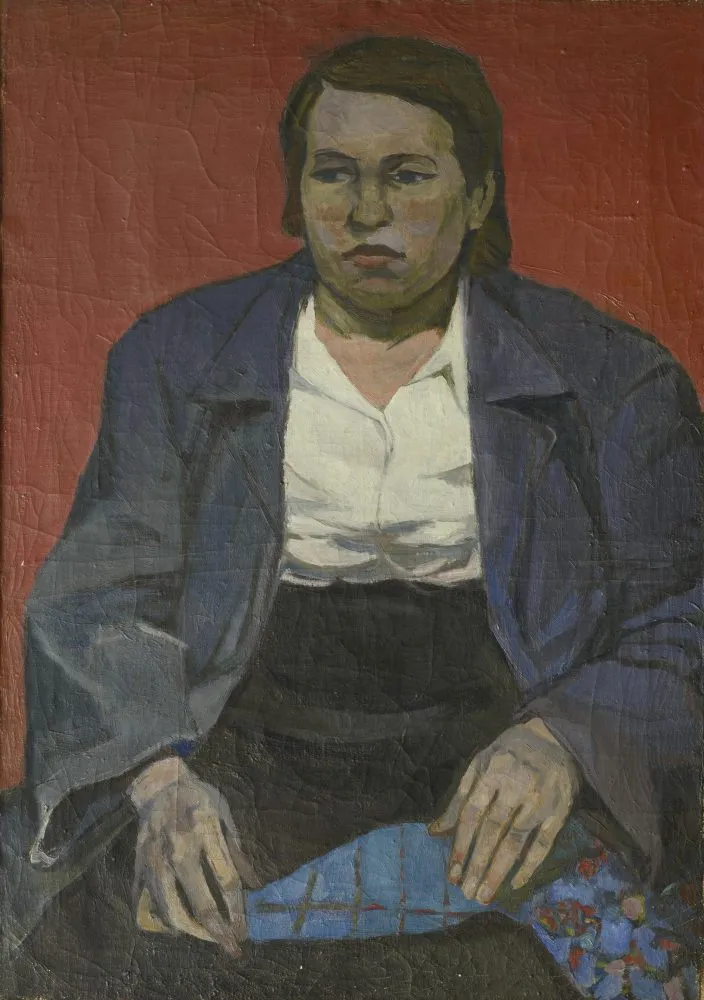
From Dr Jerke’s choices I can see that instinct directs him towards precisely this attitude: a search for universal truths. In the art surrounding him, the collector finds emotions far removed from extremes, but shared by most people. He unerringly singles out works concerned with commonly experienced feelings, sensations and psychological states, rendered in an individual and distinctive manner.
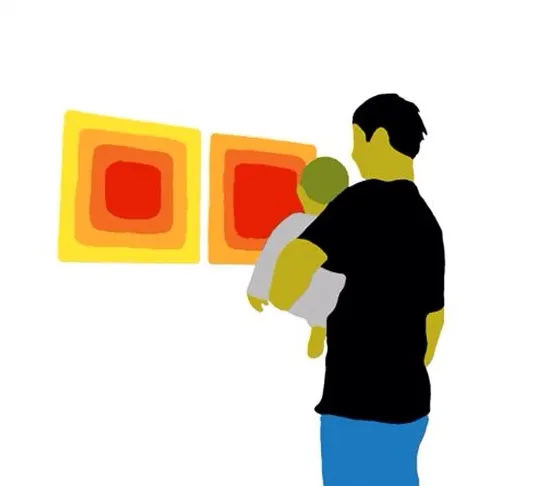
In other words, Dr Jerke — like the artists he selects — is concerned with truth.
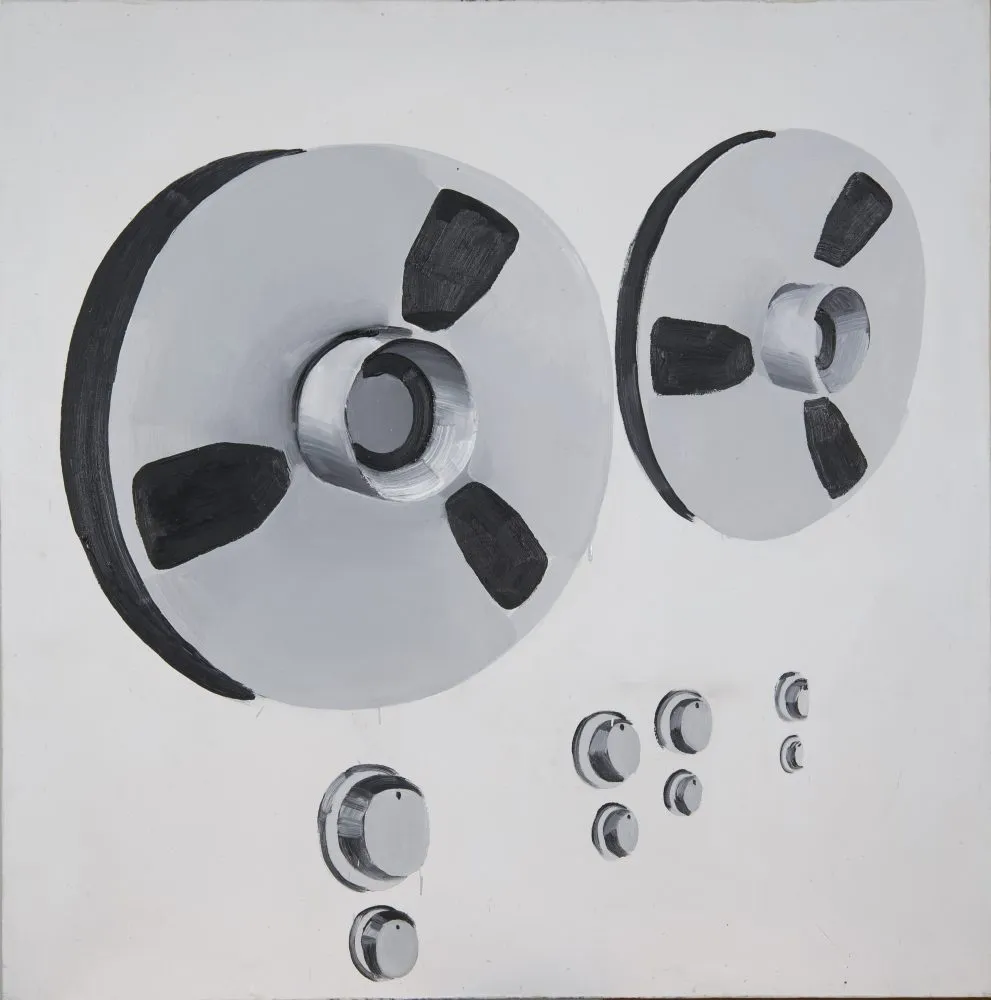
SO THAT IT LOOKS NICE
The title What Is Art For? concerns not only artistic creation but also the meaning of collecting art.
Let us begin with aesthetic needs. They cannot be eliminated, however often they are denied. As we know, this has happened repeatedly in the history of art, and every newly proposed style initially produced an aesthetic shock. Only at a later stage did people try to understand the innovation; then they became accustomed to it and… the whole game began again.
The desire to improve, order and beautify one’s surroundings is a human instinct, almost an atavism. The search for harmonious forms and the decoration of tools are difficult to explain through the utilitarian aspect of everyday objects. Nor can the existence of prehistoric paintings be explained solely as an adjunct to ritual; it was surely also connected with a desire to preserve intense experiences and emotionally charged scenes.
It is difficult to eliminate from our psyche the desire to dwell among beauty. There are, of course, many kinds of beauty, and its definition changes with each era. It can also veer towards poor taste and satisfy shallow sentiment. Does art end and kitsch begin at the boundary of what is pretty? And further: wherever kitsch meets self-awareness and becomes a deliberate means of expression, do we already have camp?
Werner Jerke clearly understands and likes artists who use irony, see reality playfully and maintain a distance from both the world and themselves.
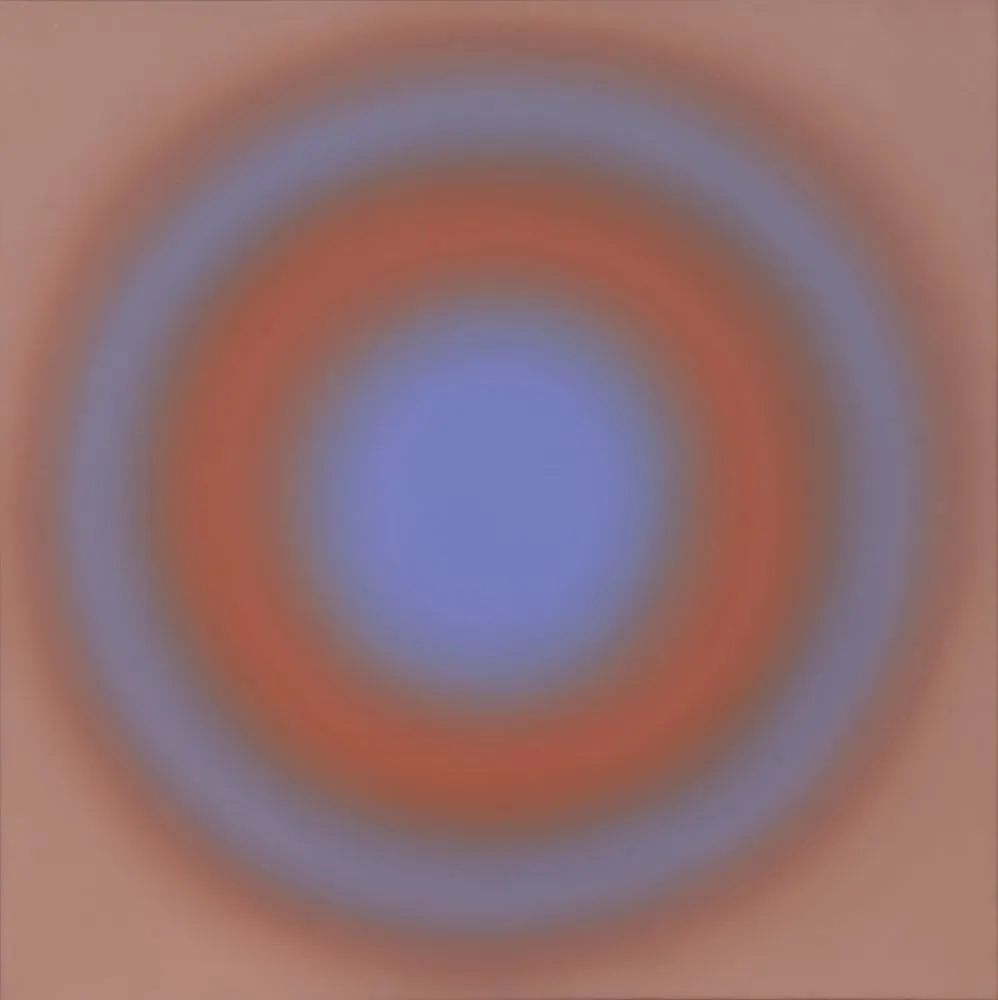
The painting of Bożena Grzyb-Jarodzka and the now-disbanded Wrocław group Luxus exemplifies such an attitude. The poverty of Poland’s difficult 1980s, colliding with aspirations to “worldliness”, produced grotesque effects. Laughter on one side, gloom on the other. Add the political context — the final years of the Polish People’s Republic — and the result is a distinctive socialist camp.
The now-defunct Ładnie Group likewise referred in its name — ironically, of course — to the human dream that things should be pleasant. Yet the art of Marcin Maciejowski, Wilhelm Sasnal and Rafał Bujnowski was and remains far removed from ingratiating itself with the public. Each former member of Ładnie extracted something from the iconosphere of popular culture and interpreted it in his own way. Photographs, television images, newspaper pictures and their captions — torn from context, all began to live lives of their own. They became autonomous paintings. Pretty in a different way, filtered through their makers’ eyes, perceptiveness, sense of humour and emotions.
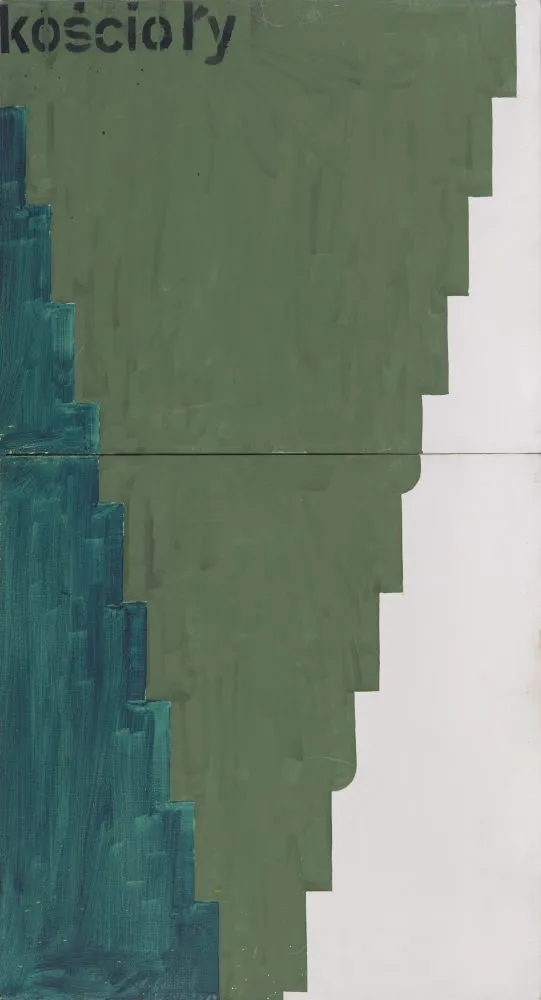
Zbigniew Rogalski approached humanity’s aesthetic needs, and his own, differently. He painted over everything. Symbolically — although in the painting, only the space around himself. In doing so he cut off his route of return. He marked the navel of his art and remained… imprisoned within it.
Paweł Książek is similar. He too separates himself from the world and experiences art alone, painfully and masochistically. And the results are pretty — beautiful, even. Painting likewise provides Radek Szlaga of Poznań’s Penerstwo team with aesthetic thrills. Whatever he turns his hand to, the results bring visual pleasure. In his work, Capitalism is placed on an equal footing with Realism.
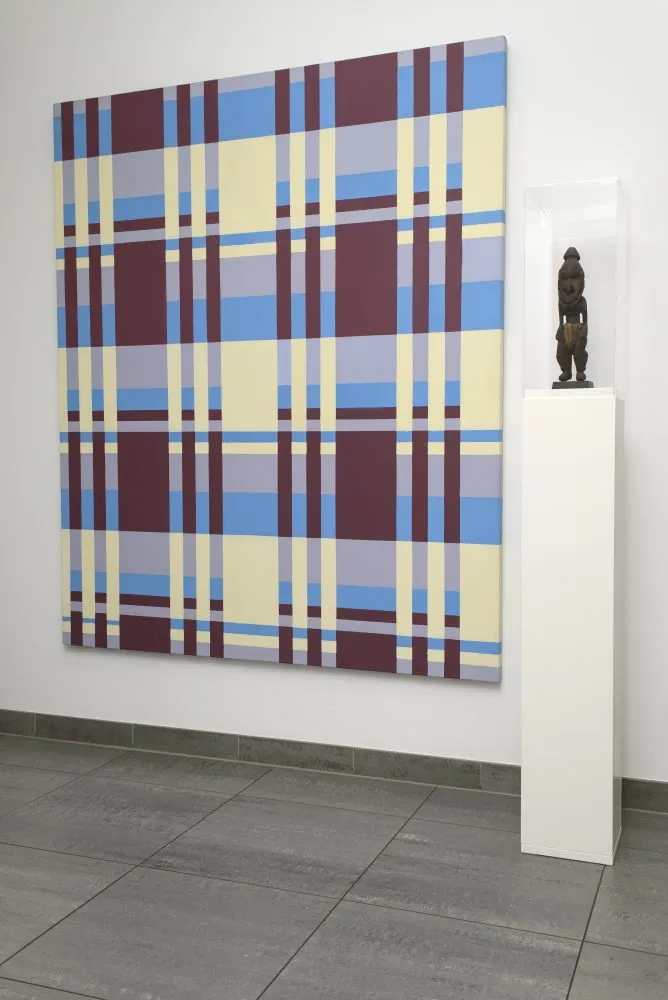
Jarosław Fliciński, by contrast, has cleansed his large-format compositions of all action or meaning. The sheer beauty of an arrangement of forms and colours satisfies him, and he shares this joy with others.
MY LIFE, MY BODY
Some respond to the world through art. It is their true language. In the only manner appropriate to them, they bear witness to their existence. And they are not concerned with life’s positive aspects.
Alina Szapocznikow told the story of illness, pain and the gradual loss of female attractiveness. She discovered previously unused materials — plastics — and combined them with a technique known since antiquity: casting from the body. Most often the face was cast, and not from a living person but after death. Szapocznikow did not confine herself to the face; she treated her entire body as a mould. The effects she achieved were far removed from Realism, evoking an unknown, indeterminate yet threatening organic matter. Her sculptures, drawings and prints conveyed the artist’s reflections on fragility and, simultaneously, strength — her own and nature’s.
Magdalena Abakanowicz also used an unconventional sculptural material: jute fabric stiffened with epoxy resin. The masks she cast from her face and mounted on tall rods like spearheads — inviting associations with Native American scalps or the impaled heads of slain enemies — do not radiate optimism. They express torment and fear of… well, of what? A fate decreed from above, transience? Or rather the human race, which attempts to shape these verdicts according to its whims?
Jerzy Bereś invoked religious rites. In performances he played the role of priest-
-shaman-iconoclast. The ostensibly ritual objects were ironic implements in quasi-sacred celebrations that in fact referred to the reality of the Polish People’s Republic. Yet not exclusively, for they also expressed human longing for something festive and extraordinary: for a lost sublimity.
The Twożywo duo — another group that has ceased to operate in the art world — offered a bitter diagnosis of our religiosity a decade ago: we worship Maria materia, matter as Mary, an emptiness without spirit or spirituality. The golden calf.
THE TEMPLE IS EVERYWHERE
Artists working in various disciplines speak of the disappearance of faith; philosophers, priests and sensitive, thoughtful ordinary people ponder the problem. Even scientists agree that eradicating higher-order needs reduces quality of life. Maria materia and material goods of every kind neither guarantee complete satisfaction nor give meaning to existence.
Spiritual needs are sometimes met through contact with art — by no means only, or not only, art housed in temples. Compositions apparently remote from the sacred can sometimes prompt spiritual illumination. Examples include the inner light in Jarosław Modzelewski’s landscapes and the cosmic order in Leon Tarasewicz’s synthetic landscapes.
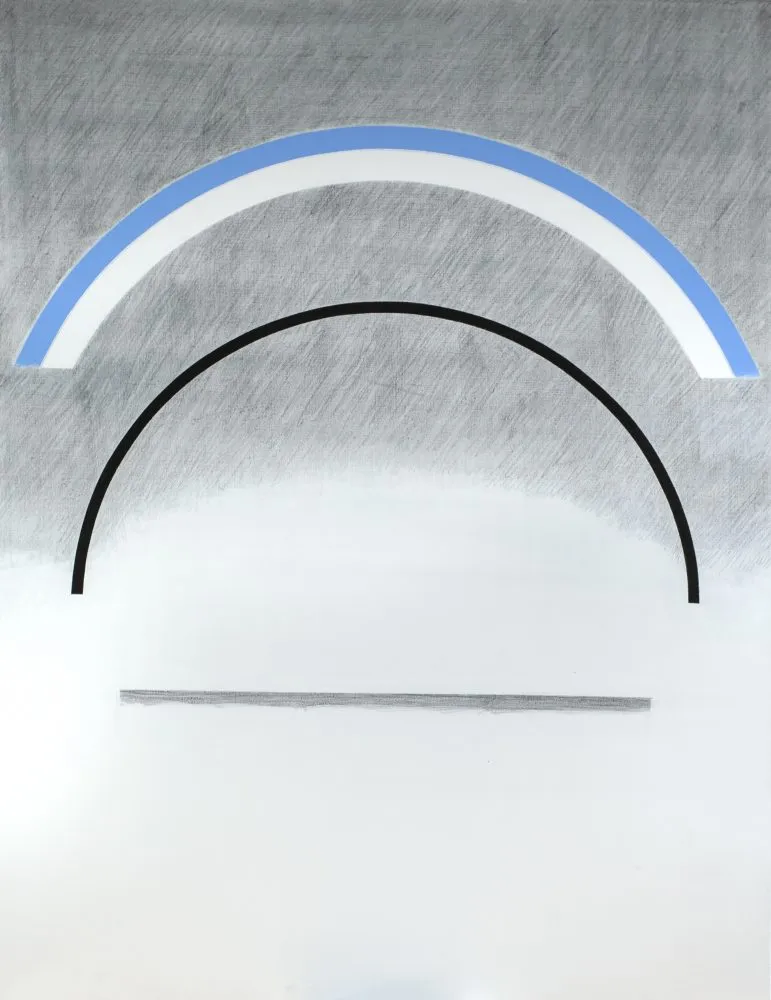
There are also non-representational works that induce a contemplative state in viewers. Objects that emanate solemnity while eluding interpretation, despite being simple to describe. Creations that compel viewers to receive them with their entire being: every sense, emotion and instinct.
Are objects with such power still made today?
In my view, some abstract compositions by Henryk Stażewski, Wojciech Fangor, Stefan Gierowski, Stanisław Fijałkowski and Jerzy Kałucki possess it.
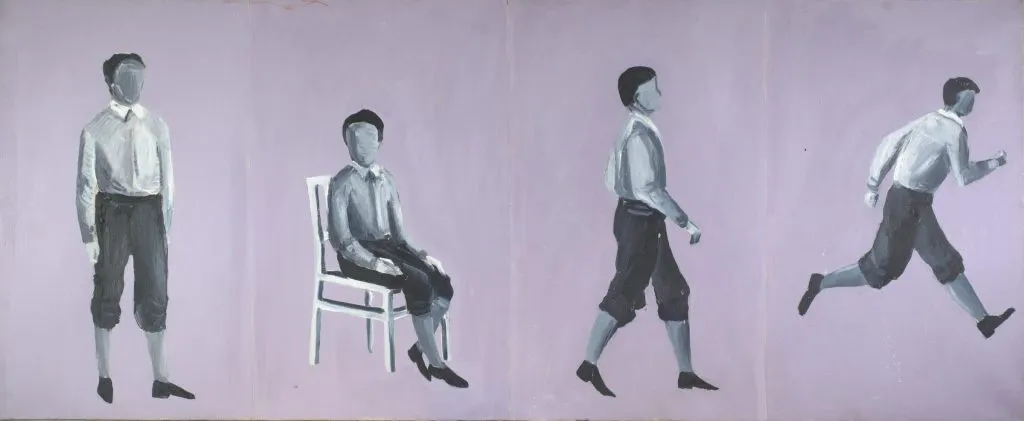
Their creations seem to glow with an inner light. The impression is created by an ideal selection of colours and shades and a perfectly harmonised arrangement of forms. Abstractions dazzling in their spiritual message.
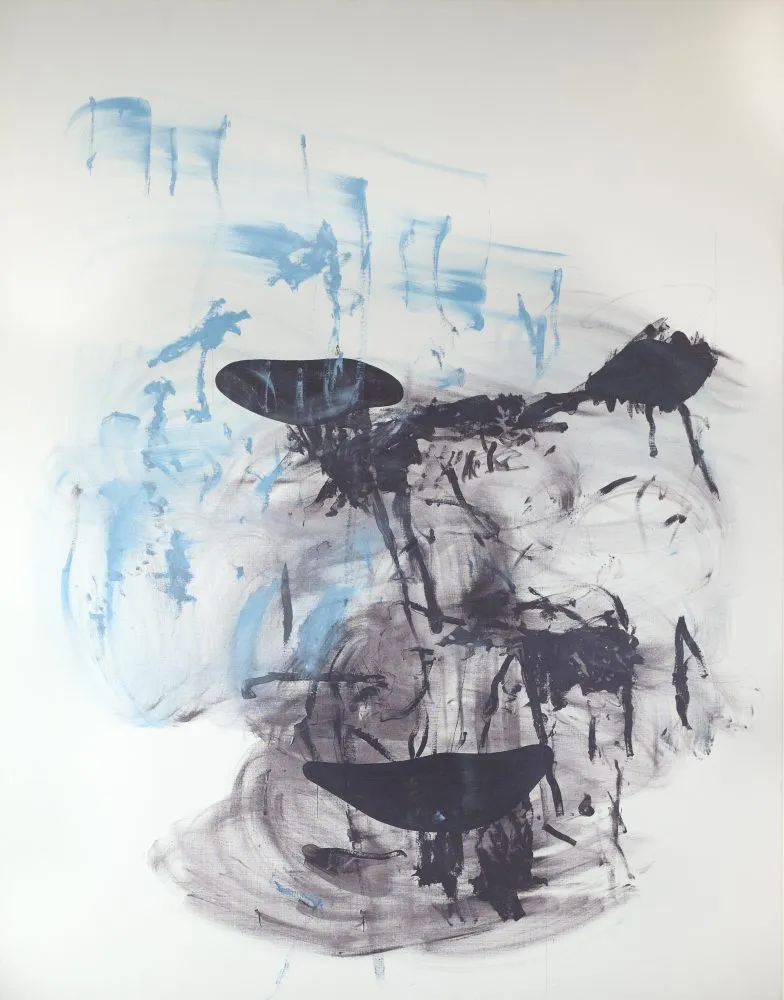
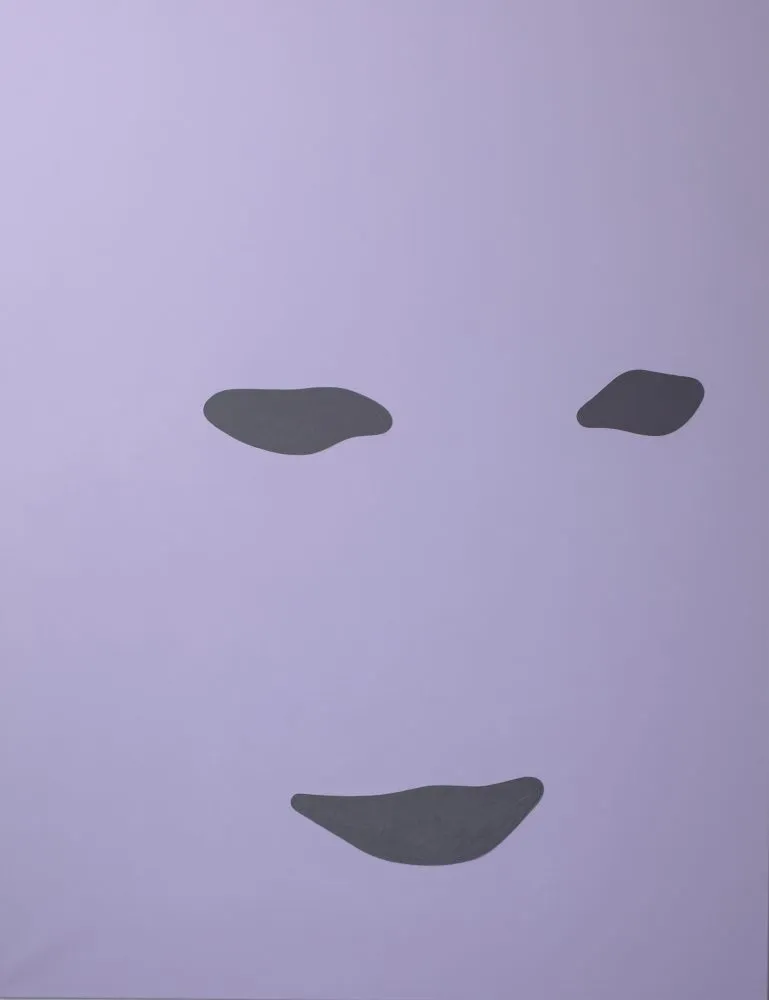
Judging by Werner Jerke’s choices, these sensations are not foreign to him.
Will the exhibition’s viewers share them?
*Monika Małkowska graduated from the Printmaking Department of the Academy of Fine Arts in Warsaw and was active in the visual arts until 1989. Since Poland’s political transformation she has worked as an art critic, journalist and advocate for culture. She writes, speaks and presents programmes about art, literature, comics and film, and is the author of books about fashion, culture and food. Her book Życie na przekąskę [Life as a Snack] will be published by Świat Książki in May. She lectures at the Academy of Fine Arts in Warsaw and the Directing Department of the Aleksander Zelwerowicz National Academy of Dramatic Art in Warsaw, and makes guest appearances at discussion forums in art schools in Katowice, Poznań and Łódź.
In 2011 she received an academic degree from the Faculty of Media Art and Stage Design at the Academy of Fine Arts in Warsaw for her dissertation Niech sczezną krytycy! [Let the Critics Perish!]. She regularly contributes to radio — TOK FM and Channels 1, 2 and 3 of Polish Radio — and TVP Kultura. Associated with Rzeczpospolita since 1994, she also writes for specialist monthlies including Sztuka.pl, Weranda, Wróżka and Notes Wydawniczy. She has run the MOMArt culture blog since 2014.