
Hendrik A. Berinson on Samuel Szczekacz
Jacek Michalak: How did your interest in Samuel Szczekacz’s work begin? Hendrik A. Berinson: I have always been fascinated by art of the early twentieth century, above all by avant-garde movements — especially the Russian and Serbo-Croatian avant-gardes — as well as by the Bauhaus and the photograp…
Jacek Michalak: How did your interest in Samuel Szczekacz’s work begin?
Hendrik A. Berinson: I have always been fascinated by art of the early twentieth century, above all by avant-garde movements — especially the Russian and Serbo-Croatian avant-gardes — as well as by the Bauhaus and the photography of the period. I was interested in artists who combined different fields and practices in the creative process, including painting, technology, architecture, typography and new scientific and technical developments. Among the best-known figures whose work I study, one might mention the brilliant engineer El Lissitzky. Yet I have always been equally drawn to artists who did not achieve spectacular careers but nevertheless left behind highly compelling bodies of work. I enjoy discovering artists who remained somewhat outside the mainstream — people whose lives, whether because of the course of history or their private circumstances, took a completely different direction and who never succeeded in building major careers.
J.M.: Where and when did you first encounter Samuel Szczekacz’s work?
H.A.B.: I first read about Szczekacz in the catalogue of Présences polonaises. L’art vivant autour du Musée de Lodz, an exhibition shown at the Centre Pompidou in Paris in 1983. Several individual works by Samuel Szczekacz were presented there. I learned that Władysław Strzemiński had given private lessons and that Samuel Szczekacz was one of his pupils. I travelled to Israel regularly at the time and, after a long search, during one visit I succeeded in finding Yehuda Tarmu, a close friend of Szczekacz. Incidentally, they had both studied with Strzemiński at the same time. I met Tarmu only in the early 1990s, after Szczekacz’s death. It was an intensely emotional meeting for him, and we became friends. He spoke at great length about Poland, Strzemiński, the artistic circles there and the world of his time, but also about Szczekacz, who emerged from his stories as a fascinating and exceptionally warm person and artist. Through Yehuda I was able to meet Szczekacz’s widow, an extraordinarily compelling woman. I had to wait several months until the boat on which she lived came into the Haifa marina for its annual inspection. I purchased Szczekacz’s works and his library from her; it contained many important publications on the Łódź avant-garde and Władysław Strzemiński. One of the most significant and valuable items in the library proved to be the typescript of A Functional Łódź, previously considered lost, with Szczekacz’s original drawings. I donated it to the Museum of Art in Łódź. In this way, my interest in and fascination with the Polish avant-garde developed — and my Polish roots are not without significance here.
J.M.: Galerie Berinson has operated since 1986. It has an excellent location in an interesting building — the former Merkur department store — in central Berlin, collaborates with numerous international museums and galleries, regularly takes part in leading art fairs such as Art Basel and Art Cologne, and has produced many publications. A distinguished portion of Samuel Szczekacz’s oeuvre came into your hands, and, as you have stressed, you have an emotional connection to it. Yet his work remains unknown. Why do you think this is?
H.A.B.: Perhaps it is because his surname is so difficult to pronounce. More seriously, over the past decade or so I have succeeded in interesting others in Szczekacz’s work, and selected pieces by the artist are now held in international collections. We should not forget, however, that the art market is extremely brutal, and it is difficult to imagine Szczekacz establishing a presence within it — but that is not my aim. This is art for connoisseurs and enthusiasts like me. For years, I tried to organise a Szczekacz retrospective in his native city, Łódź. Until now, these efforts have ended in failure, so it is difficult to speak of international scope or interest in such an undertaking. All the more, I would like to emphasise how immensely pleased I am that a collaboration with Atlas Sztuki has come about and that Szczekacz is returning — if only for the brief duration of the exhibition — to his native Łódź.
J.M.: From your perspective, and from Berlin’s, how would you assess the level of interest in Polish art?
H.A.B.: Very few good works from the period that interests me personally — before the Second World War — remain on the art market. Over the years, I have succeeded in placing photographs by Stanisław Ignacy Witkiewicz, whom I consider a genius, in important private and public collections, especially in the United States and France. I presented an exhibition of his work at the gallery in 2003. My collection also contains works by other well-known Polish artists, including Karol Hiller, Roman Opałka and Stefan Wegner, as well as Edmund Strążyski, a completely unknown friend of Witkacy.
Berlin, 5 October 2012
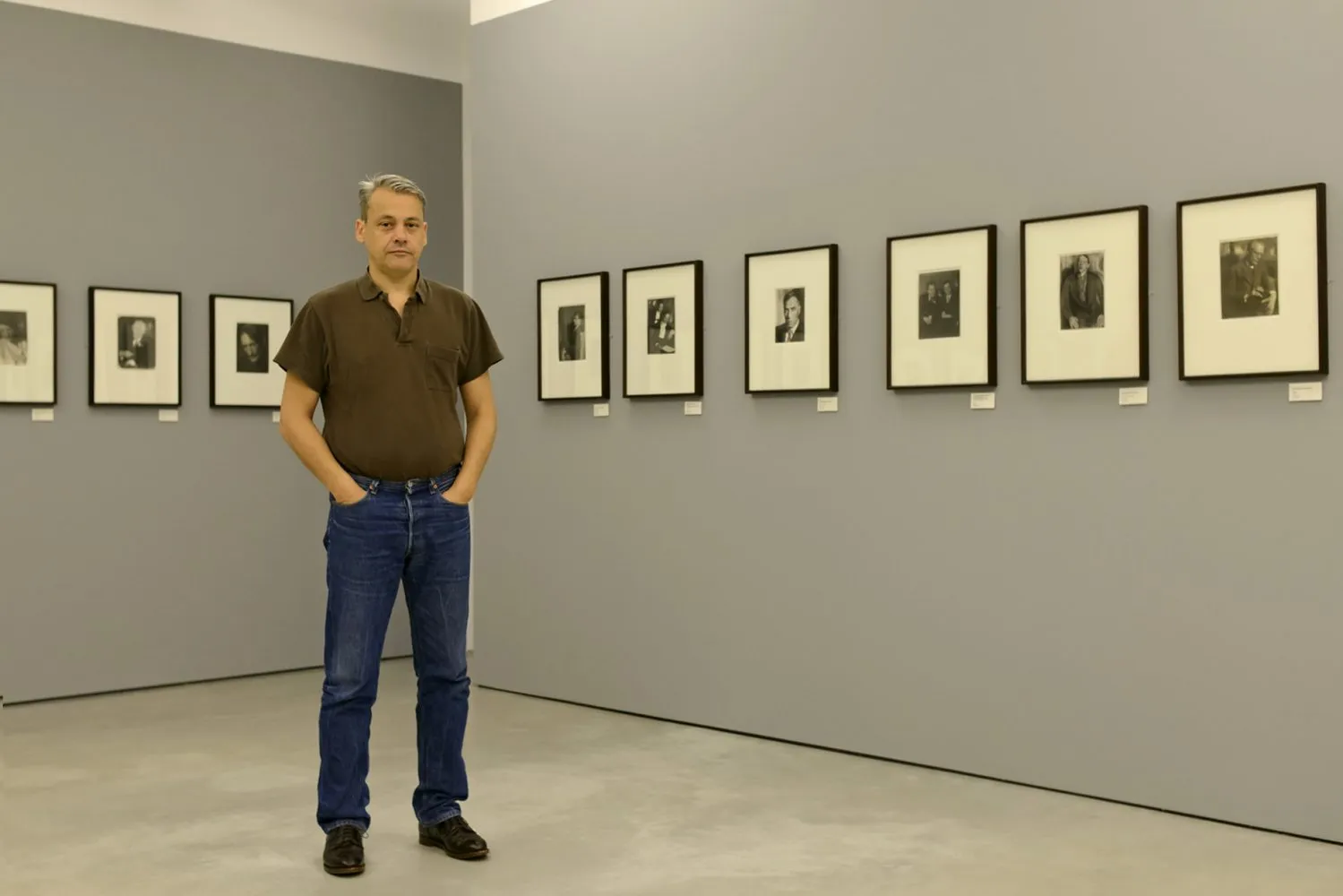
Hendrik A. Berinson is the founder and owner of Galerie Berinson in Berlin, where he promotes the work of artists including Stanisław Ignacy Witkiewicz, George Grosz, Max Ernst, Hans Bellmer, Raoul Hausmann and László Moholy-Nagy. In 2009, he organised solo exhibitions of Samuel Szczekacz’s work in Berlin and Warsaw.