
…
Anna Saciuk-Gąsowska
When Samuel Szczekacz completed secondary school in 1935, the International Collection of Modern Art assembled by the “a.r.” group had already been on display for four years at the J. and K. Bartoszewicz Museum of History and Art in Łódź (now Muzeum Sztuki). Visitors could see works by Alexander Calder, Tytus Czyżewski, Theo van Doesburg, Jean Hélion, Vilmos Huszár, Katarzyna Kobro, Pablo Picasso, Władysław Strzemiński, Georges Vantongerloo and Stanisław Ignacy Witkiewicz, among others. In his introduction to the collection catalogue, Przecław Smolik wrote: “The aim that guided the initiator, the organisers and the artist-donors alike was to bring nations closer together and enable their mutual understanding through the exchange and appreciation of the most precious of goods — the achievements of spiritual culture. This act by European artists deserves respect not only because it is selfless, but still more because the Łódź collection makes it possible, for the first time in Poland, to look seriously and closely into the face of the profound and still so little understood revolution that has been taking place in European art for twenty-five years.”1
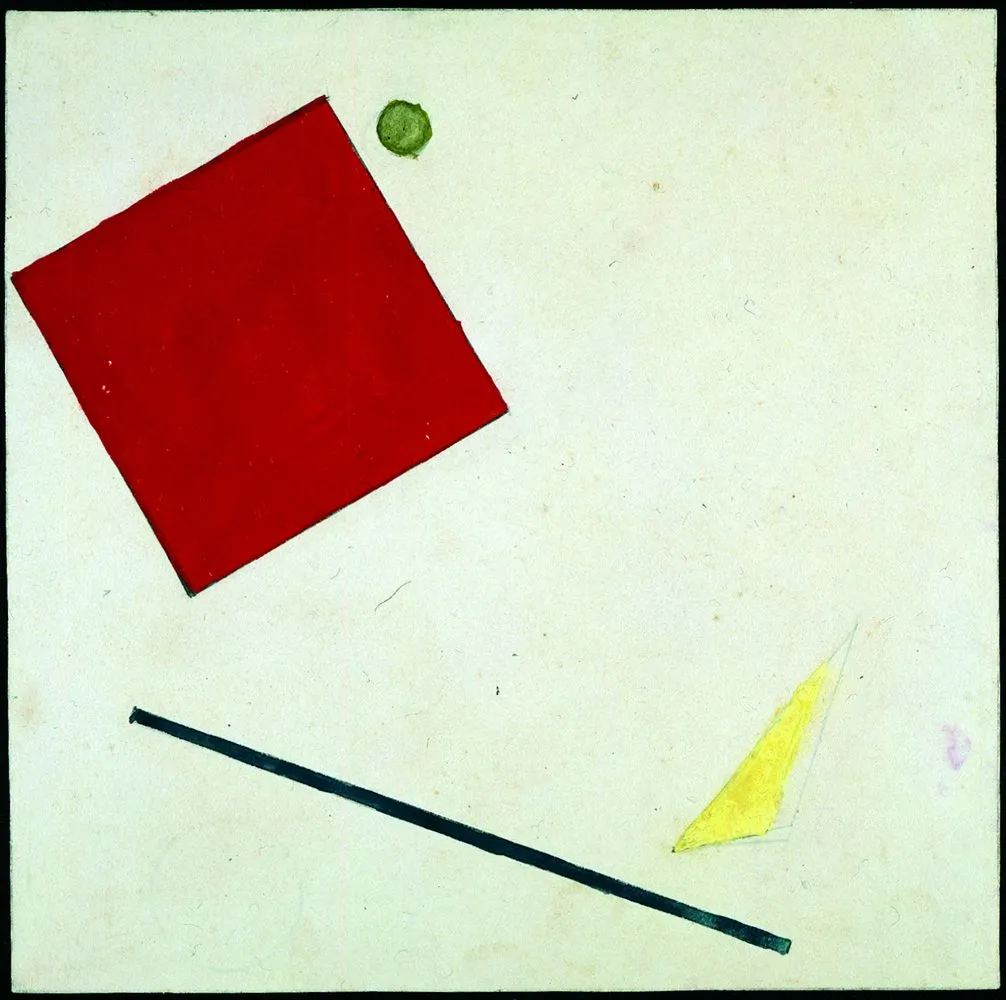
Did the young Szczekacz, who studied drawing with Maurycy Trębacz — a graduate of the Kraków and Munich academies and a traditionalist — visit the museum, or did his fascination with modern art result from his subsequent studies under Władysław Strzemiński? In 1935 Mojżesz Broderson, a co-founder of the Yung-yidish group, introduced Strzemiński to a small group of Jewish boys who wished to study in his studio. They were Samuel Szczekacz [Samuel Zur] (1917–1983), Julian Lewin (1917–1940), Pinkus Szwarc [Pinchas Shaar] (1923–1996) and Juda [Yehuda] Tarmu (1919–2000).
Strzemiński came to Łódź in 1931 after being appointed head of Public Vocational Continuation School No. 10, which specialised in printing and typography. From the outset of his teaching career in Łódź, he held clearly defined views on education. He wanted new typographic form to arise not merely from proper vocational training, but to be understood and translated creatively into the designs produced by students. As he emphasised, pupils should receive not ready-made formulas but a “foundation of knowledge”. A completed design was to express the student’s awareness and ability, rather than merely their technical proficiency. To achieve this aim, he proposed a new system of education in which the history of the latest art — from Cézanne and Cubism to Unism, which he himself advocated — played a significant role.2
Strzemiński believed that art was in a state of continuous development (“Art is an infinite development”3) and that each successive movement was a natural continuation and refinement of its predecessor. Each revealed the world through its own means and marked out new paths. Like the artist, the viewer had to pass through the successive stages of art’s development in order to understand the art of the present. The historical starting point for the lectures was Cézanne and Cubism, which developed his method of working and seeing the object. Strzemiński analysed the construction of Cubist paintings, their ways of depicting reality and their new possibilities of perception and “visual content”. Drawing upon the International Collection of Modern Art — a natural point of reference for his lessons — he taught pupils not only how to see and understand, but also how to solve practical exercises in Cubist composition. In Strzemiński’s understanding, however, Cubism was only a transitional form that, like every movement, continued to evolve. Its next stages were Malevich’s Suprematism and Neoplasticism, and finally Unism. The programme of study followed this path, from Cubism to Unist compositions. Only after attaining proficiency in practical problems connected with these movements did the pupils begin designing typographic layouts. Their task was not only to master the new forms of art and incorporate them into their printed designs, but also to develop them by seeking solutions better than those already known.
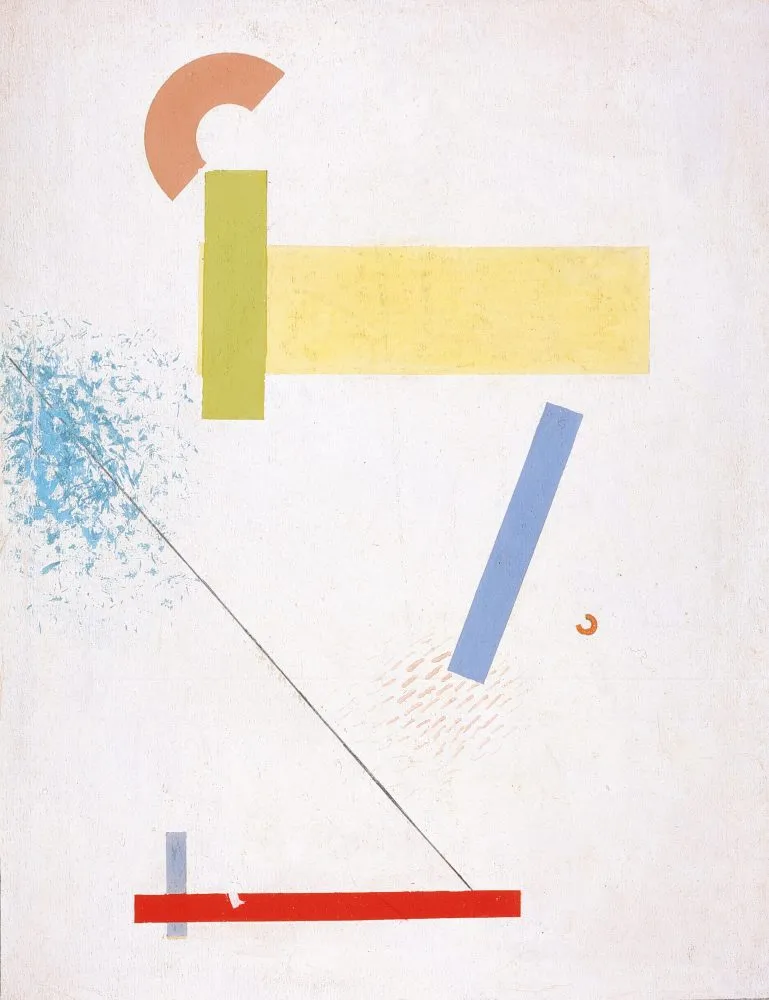
Strzemiński applied similar principles when teaching drawing and painting to a group of private pupils. Szczekacz, Lewin and Szwarc left his studio with an understanding of how to construct a picture: how to compose it, divide its plane through colour and texture, and shape spatial forms on the basis of Strzemiński’s theory of art, particularly Unism.
The premise of Unism was to create paintings devoid of all references to the visible world and to “literature”, composed so that the surface of the canvas remained homogeneous and every fragment of the picture was as important to the whole as every other. This meant abandoning contrast and all mutually opposed or dynamic forms.
According to Strzemiński, Unism was the artistic form that most fully reflected contemporary aspirations towards the organisation of social life.
The artist wrote: “The drive towards unified organisation is the deepest and most universal impulse of our times. It is the social foundation of Unism. Changes in the organisation of states are moving towards a supra-individual arrangement of equal, interdependent elements […].”4
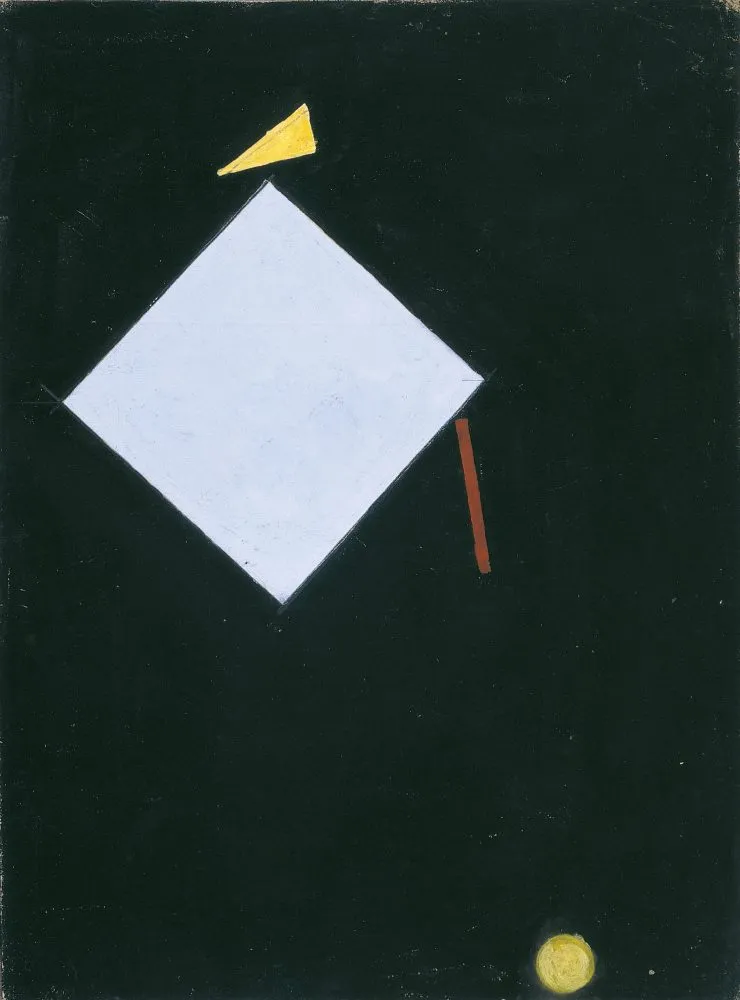
“The task today is not to intensify the dynamic forces of a system thrown out of balance and overcoming one catastrophe by means of another, but to construct organically a balanced whole and organise a system of unified social forces.”5
This theory of ordering life meant that an abstract painting — a quadrilateral with a flat surface, an autonomous entity in which every fragment was “equal and interdependent” — was simultaneously a social appeal with revolutionary implications. Within his teaching system, Strzemiński’s social theory must have been as important as his theory of the image.
Strzemiński’s pupils repeated their teacher’s propositions like a mantra, both in practice and in the theoretical assumptions underpinning their own work. Describing his painting reproduced in Forma, Lewin wrote:
“The absence of interdependence and equality among the visual elements of Baroque construction, resulting from the maximum intensification of contrasts, destroys the inherent attributes of the picture — its unity and organic character.
Cubism is a continuation and consistent development of the Baroque. The evolution of Cubist concepts towards the liberation of painting from the objecthood that overwhelms it leads to abstract art. […]
The historical development of the problem of form as the fundamental object of inquiry in abstract art leads consistently to Unism. Against the dynamic dualism of Baroque-Suprematist form, Unism sets the conception of a painting as a uniformly constructed organism founded upon the concordance and equality of all its constituent elements.”6
Szczekacz placed a very similar text beside his own painting:
“The compositional system of the Baroque and the movements derived from it (Cézanne, Cubism) was based upon the principle of contrasts. An attempt was made to achieve the unity of the picture by contrasting its individual constituent elements (line, plane, colour and texture). […] Against the system of Baroque-Cubist dynamisms and supremacy we set the compositional Unism of equally interdependent elements.”7
Szwarc approached the matter least dogmatically: “An inability to think abstractly characterises every primitive mentality. […] A mature person, by contrast, even one of minimal intelligence, possesses this capacity for abstract thought to a greater or lesser degree. […] The reproduced picture represents one stage along this path — from objecthood in the image towards pure painting.”8
On Strzemiński’s recommendation, all three became members of the Trade Union of Polish Visual Artists in Łódź by the end of 1936, which allowed them to participate in exhibitions organised by the union.9
Strzemiński’s lessons taught them more than how to wield a brush: they also practised graphic art, sculpture, photomontage, graphic design and typography.
Possessing such broad artistic knowledge at so young an age, they had excellent prospects for development. They submitted work to the union’s exhibitions in Łódź, Kraków and Lviv.
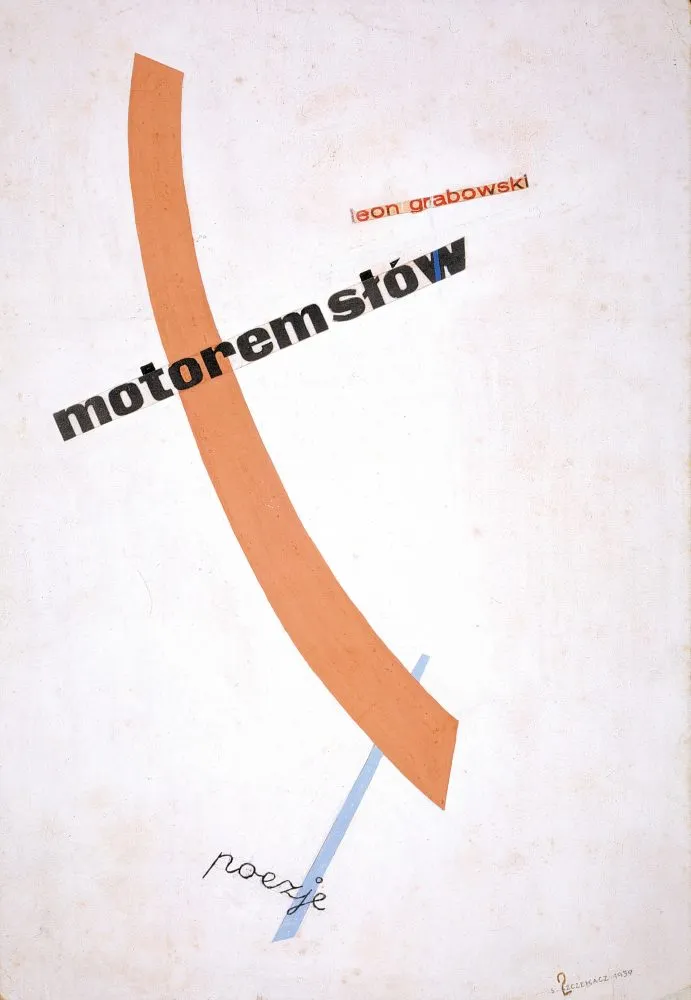
In 1938 Władysław Strzemiński published a collection of poems under the pseudonym Leon Grabowski. With profound confidence in his pupil’s abilities, he entrusted Szczekacz with designing the volume’s graphic layout. Motorem słów [The Motor of Words] was printed at Public Vocational Continuation School No. 10 in Łódź.
A year later, at Broderson’s request, Lewin and Szwarc used photomontage to illustrate his collection of poems Jud. They employed photographs by Mendel Grossman, who would later become a photographer of the Łódź Ghetto. This marked the beginning of a friendship between Grossman and Szwarc.
The Second World War interrupted these promising careers. Lewin was killed at Treblinka. Szwarc survived the occupation in the Łódź Ghetto; in 1944 he and his family were deported to Sachsenhausen concentration camp, which he also survived. After the war he initially lived in Munich, then Paris, before moving to Israel in the 1950s. He continued to paint and also produced numerous book illustrations.
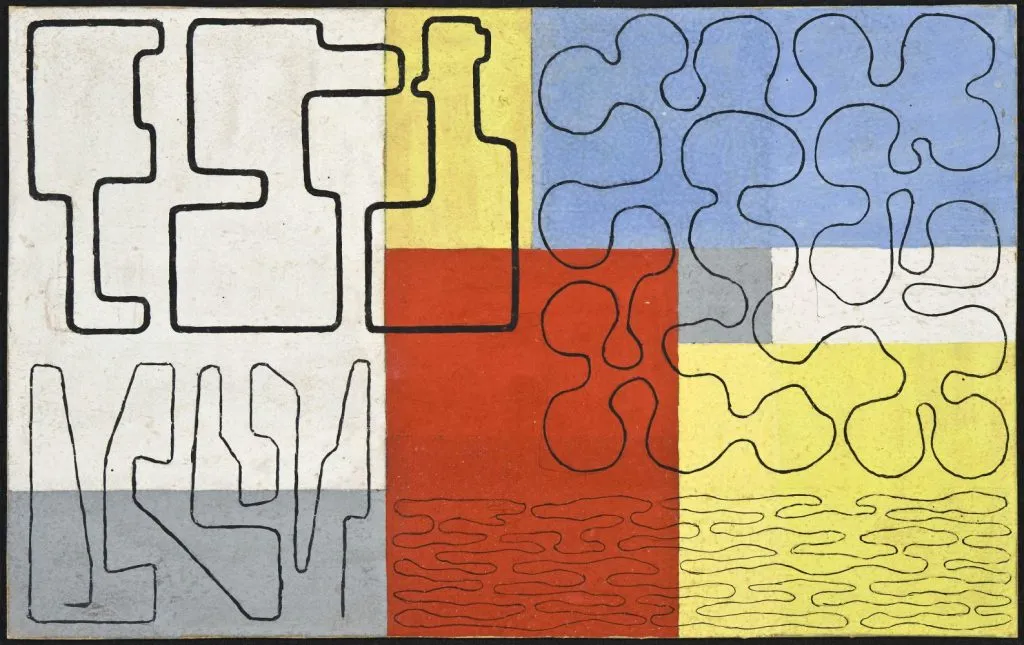
Samuel Szczekacz left Poland in 1938 intending to study architecture in Belgium. A few months later, in the spring of 1939, he departed for Palestine. He changed his surname to Zur and worked in graphic and spatial design. He took a large proportion of his pre-war paintings with him, making his work the clearest surviving record of the educational process: the successive stages of study and the path towards an independent practice that nonetheless remained strongly influenced by Strzemiński. Muzeum Sztuki in Łódź holds only one of his paintings, Cubist Composition (1937), together with a portfolio of sixteen lithographs comprising two Neoplastic Compositions, one Neoplastic-Cubist Composition, ten Cubist Compositions and three Unist Compositions. A second version of the portfolio differs slightly in the colours of the individual prints. The most interesting is undoubtedly No. 16 (Unist): the square plane is divided into equal rectangular fields, each filled with two letters. The exception is the letter “m”, which fills an entire rectangle. The Łódź print has sapphire letters on a white ground, although the same work is also known in other colour variants. It anticipates concrete poetry in a remarkable way.
After the artist’s death, the remainder of his oeuvre — taken out of Poland by Szczekacz and thereby saved — was acquired by Hendrik A. Berinson, a German collector and gallery owner in Berlin. A catalogue published by the gallery in 2009 offers a view of the substantial and fascinating legacy of an artist so little known in Poland. Particularly interesting are photographs showing spatial constructions by Szczekacz and his colleagues, which form a bridge between Malevich’s architectons and Kobro’s spatial compositions. In this context, it would be highly instructive to present the artist’s post-war work, especially his architectural designs.
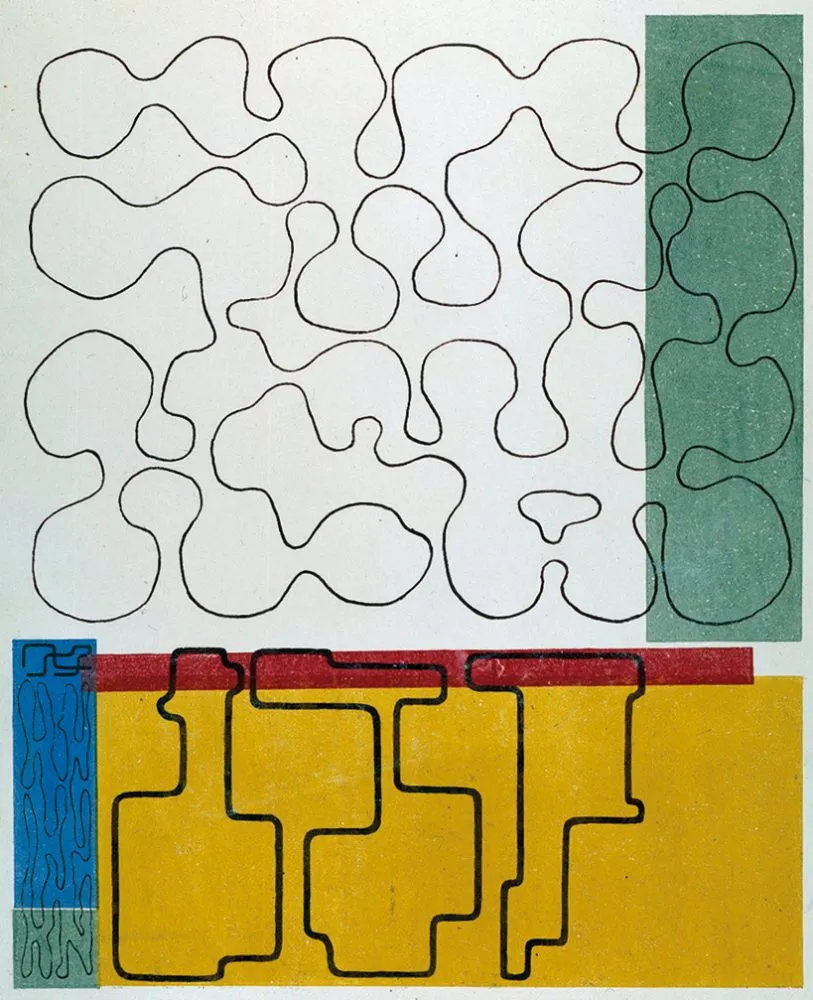
In 1983 Samuel Szczekacz travelled to Paris for the exhibition Présences polonaises,10 where his pre-war graphic works were shown for the first time in many years. He died suddenly of a heart attack in Paris.
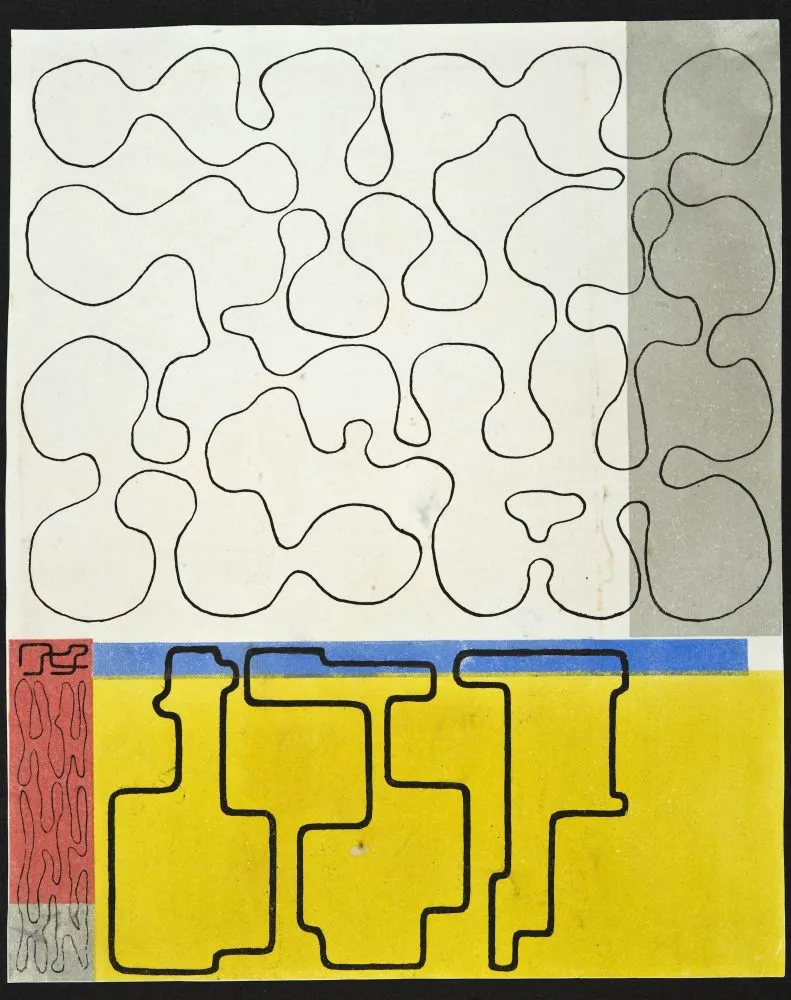
Anna Saciuk-Gąsowska is an art historian, museum professional and curator in the Department of Modern Art at Muzeum Sztuki in Łódź. A graduate of the postgraduate programme in museum studies at the University of Warsaw, she is the author of several dozen texts on art and lectures in art history and theory at the Academy of Fine Arts in Łódź and the Łódź Film School.
1. P. Smolik, “Przedmowa”, in Miejskie Muzeum Historii i Sztuki im. J. i K. Bartoszewiczów, Międzynarodowa Kolekcja Sztuki Nowoczesnej. Collection Internationale d’Art Nouveau, Catalogue No. 2, n.d. (1932), unpaginated.
2. He published his views on teaching methods in: W. Strzemiński, “Sztuka nowoczesna a szkoły artystyczne”, Droga, 1932, no. 3, pp. 258–278.
3. Ibid., p. 272.
4. W. Strzemiński, “Dyskusja L. Chwistek – W. Strzemiński”, Forma, 1935, no. 3, p. 4.
5. W. Strzemiński, “Matejko”, Forma, 1936, no. 4, p. 6.
6. J. Lewin, untitled, Forma, 1938, no. 6, p. 23.
7. S. Szczekacz, untitled, Forma, 1938, no. 6, p. 25.
8. P. Szwarc, untitled, Forma, 1938, no. 6, pp. 25–26.
9. I draw this information from Z. Karnicka, “Julian Lewin, Samuel Szczekacz-Zur, Pinkus Szwarc (Pinchas Shaar)”, in Polak, Żyd, artysta. Tożsamość a awangarda, folder accompanying the exhibition, Muzeum Sztuki in Łódź, 17 October 2009–31 January 2010, Łódź 2009, p. 34. Lewin and Szczekacz were nineteen at the time, and Szwarc was six years younger (although this date of birth is consistently repeated in all available sources). The possibility that he became a member of the union is therefore rather surprising; nor do I know of any document that would confirm this information.
10. Présences polonaises. L’art vivant autour du Musée de Lodz, Centre Georges Pompidou, Paris, 23 June–26 September 1983.