
Śpiewogra Atlasa Sz. z Łodzią K.
featuring, for Łódź Kaliska: Marek Janiak as Janiak, Andrzej Kwietniewski as Kwiecień, Andrzej Wielogórski as Makary and Andrzej Świetlik as Świetlik for Atlas Sztuki: Krzysztof Cichoń as K.C. and Andrzej Walczak as A.W.
(a typical Łódź office just before Christmas)
A. W.: We intend to conduct the interview as you would: in three different versions, swapping the names and statements around.
Janiak: You’re joking? It’ll be a disaster!
A. W.: For example, we’ll attribute Marek Janiak’s long and boring statements to…
Kwiecień: Makary.
A. W.: So what are we supposed to do, credit all of you as Łódź Kaliska?
Kwiecień: I hereby declare that I agree to absolutely everything, because art is so open and unserious that it cannot be treated like signing a notarised agreement…
Janiak: Excuse me, I think art is a serious matter. Much more serious than some notarised agreement. I object, because I am accustomed not so much to my name as to the content I emit. And I would not always want that content assigned just anywhere.
* * *
Janiak: Is this recording?
A. W.: Let’s not check. Before you founded Łódź Kaliska, did you know you would be so successful?
Janiak: Yes.
A. W.: Then why did you found it?
Janiak: So the success wouldn’t be quite so great.
A. W.: Do you pay any taxes?
Kwiecień: We have legal personality and full accounts. Our accountant says we overpay every year, but she doesn’t claim a refund in case it triggers an audit.
A. W.: Do you have any turnover in art?
Świetlik: Copernicus wrote about that.
Kwiecień: To be honest, we sell quite a lot by our standards, but…
Janiak: It isn’t recorded.
A. W.: I take it that yours is art in its purest form, since you don’t make a living from it?
Janiak: We haven’t managed to.
Świetlik: Our art is twenty per cent commercial, because Kwiecień makes his living from art.
A. W.: It’s absurd that Łódź Kaliska has a commercialist among its members! How strange – and you look like a real artist.
Kwiecień: In my entire artistic life, which is something like thirty years, I have never made anything I didn’t want to make just so it would sell.
K. C.: Do you gentlemen have anything to do with art?
Kwiecień: I believe – though Marek Janiak will probably disagree – that we became conscious of art only quite recently.
Janiak: I would disagree. Perhaps some of us did, but why generalise?
Kwiecień: We used to play a game that many people treated as art; now we ourselves puff up with artistic pretension.
A. W.: I don’t know how I’m supposed to talk to you. Dr Cichoń, who have you brought here?
K. C.: They were already here when I came in.
* * *
(a typical Łódź pizzeria just before Easter)
K. C.: What we’re recording is going to appear in Arteon.
Kwiecień: If it’s going to be in Arteon, we’re recording this conversation too early.
Świetlik: There are too many unknowns.
Kwiecień: If it took place on, say, 20 April, we would already know what we were coming up with. We’ll have an idea of how it is turning out after the first day of the shoot: how well we can reconcile the freedom of Łódź Kaliska with these fairly fundamental problems I want to address. Only then will we be able to discuss what the exhibition will look like.
K. C.: Unfortunately, by 20 April this conversation has to have been proofread long ago, and there’s no way to change that… It follows directly from the ironclad freedom of Atlas Sztuki. On 20 April, Dominik Lejman’s exhibition – the one before yours – will open…
Kwiecień: That could be an interesting exhibition, because he has ordered a great many projectors… and image-delay devices.
Świetlik: In that case, I wonder whether we shouldn’t leave part of Lejman’s exhibition in place. At least one work, because we could use it to fill one of the A entries in Alementarz: Adaptation.
* * *
K. C.: How do Łódź Kaliska’s finances work? I’ve been told that you are apparently the only person ever to submit an invoice for the sale of a work.
Makary: We are beginning to sell.
K. C.: Does that affect how you operate in any way? Does it change anything, is it something you discuss?
Makary: No, although we have become a little commercial, because there is no other way. An artist needs a certain level of comfort to be free. We have no comfort, and we don’t know if we ever will. Perhaps we’ll be lucky and what we sell will provide us with some sort of pension.
K. C.: Doesn’t dealing with the professional world of curators, dealers and foreign exhibitions force you to become far more diligent and organised?
Makary: You know, it pisses us off; it irritates us. What has it got to do with us? If someone wants to sell us, let them take care of it. Why should I care how much our work weighs or what its dimensions are? The artist supplies the product, and that’s that.
K. C.: So you don’t get uptight about it.
Makary: Not at all – and that’s our greatest problem. We can’t get ourselves organised.
K. C.: And will you finish this Alementarz in time? The exhibition is in a few weeks and you’re only just starting. From Atlas Sztuki’s point of view, it looks like a guaranteed disaster. It’s a good thing that with you…
Makary: You know, a lot of things have looked like this. That is what Łódź Kaliska is like.
* * *
Kwiecień: I can feel my venous and arterial blood beginning to mix.
A. W.: Should I stop?
Kwiecień: No, no, no. I can feel you drawing me into a discussion that is beginning to matter.
A. W.: I don’t want anything except for this to be the beginning of something lasting. Something that grows. Something that, in three or five years, will be Łódź Kaliska’s alphabet.

Kwiecień: I thought you would ask other artists to write the letter B for themselves. If you think we’ll make it all the way to Z in good style, then…
A.W.: A primer, an alphabet, is a kind of sign. And at the same time it is pure abstraction, because writing is abstract.
Kwiecień: I recently bought a book about the history of China in an antiquarian bookshop. A big, beautiful book. I was astonished at how many cultural inventions originated there, only to be forgotten very quickly and later rediscovered in Europe. I’ll give you an example: movable type. Books were being printed in China four thousand years ago. The type was fired from clay, and print runs reached a thousand copies. It lasted only a hundred and fifty years.
Janiak: The conclusion is that creativity and memory don’t go hand in hand.
Kwiecień: The Chinese invented the decimal system, money. And it occurred to me that China is the same kind of entry as an alphabet or a primer. China itself, the word China…
A. W.: For me, that country is just the opposite – entirely derivative.
Kwiecień: Do you have the latest edition of The 100: A Ranking of the Most Influential Persons in History? A new edition comes out every year. Lin Pi was always second; now he is first. Lin Pi is the man who invented paper. The book is compiled by Oxford professors…
K. C.: Recently it was the Chinese who compiled it, I think…
Kwiecień: Curie-Skłodowska appears in the supplementary notes, somewhere in the two hundreds. When I was devising our project Chinese People Watching an Advertisement…, I became completely obsessed with China: how great that nation once was, and how it is now trying to regain the position it once held.
A.W.: That Chinese People project isn’t bad. Your Chinese People, because there is a certain idea visible in it. I would agree with that.
K. C.: Besides an idea, you can even see a kind of logo in it…
A. W.: What logo? Perhaps I’m missing something? Do the Chinese have a logo?
Janiak: There is a logo in the installation.
Kwiecień: Listen, the sheer number of things the Chinese invented…
A. W.: How should we understand your constant return to China?
* * *
(conversation in a pizzeria)
K. C.: Gentlemen, what will this Alementarz be about?
Kwiecień: At the beginning, when Janiak came in with the Alementarz project, we understood that we had to start with Falski. Then I went to Zduńska Wola and, with the school librarian at a primary school, looked through Poland’s largest collection of primers. The opening pages of Marian Falski’s primer – dating from around 1910, I think – really are infantile. Our idea was to depict a certain infantile world through mature art. But when I looked through the primer to the end, I discovered that it addresses increasingly serious subjects, and that the end of the book is essentially the whole of real life. Falski’s primer talks about everything: a person’s entire life, illness and death. My approach to this work changed in that my ideas gravitate towards this more serious, mature part. I expect the others will make use of different elements. I realised rather late that the primer isn’t only As and Ala, but also racial issues. Bambo, for instance, whom Tuwim made fun of.
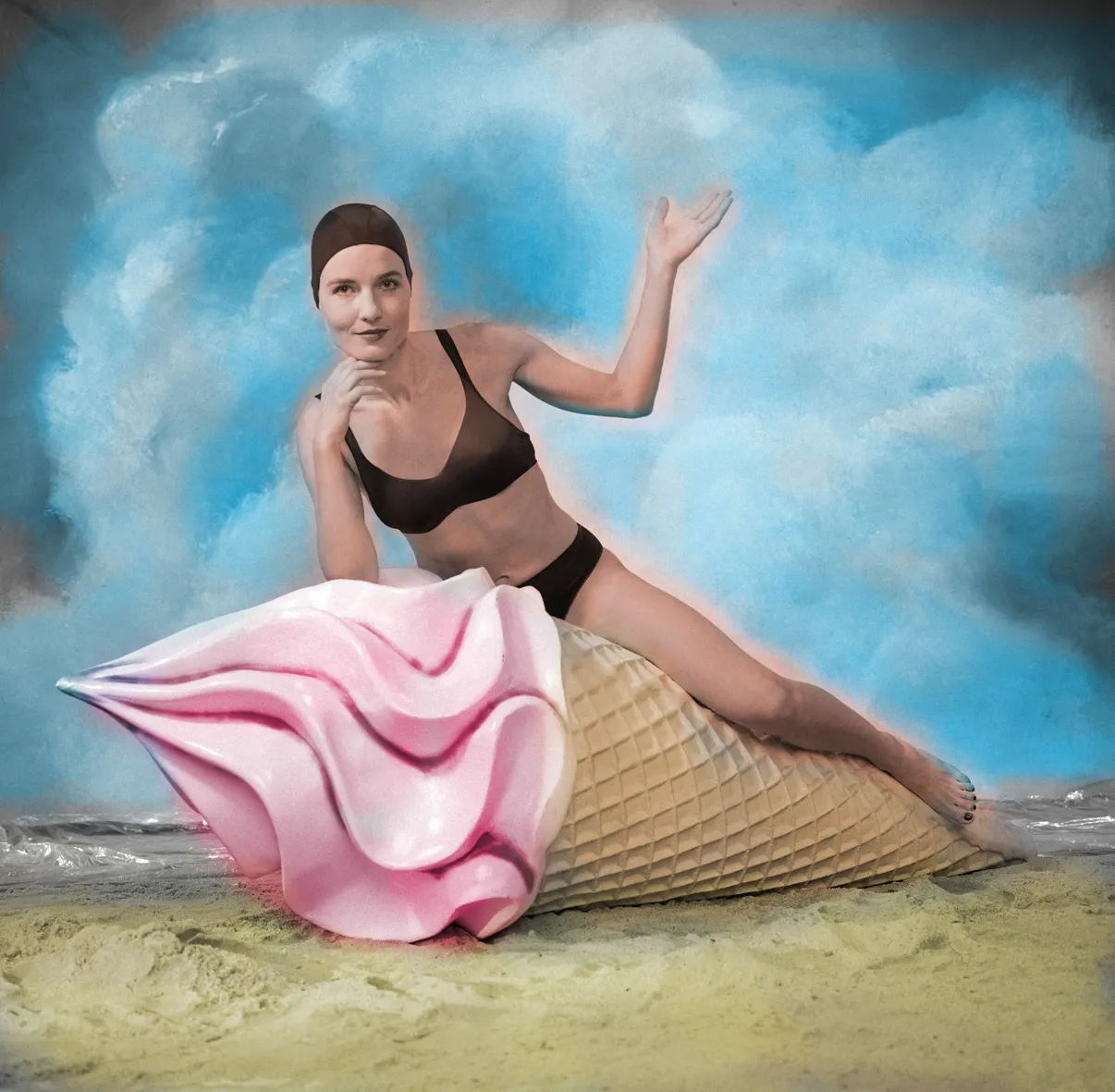
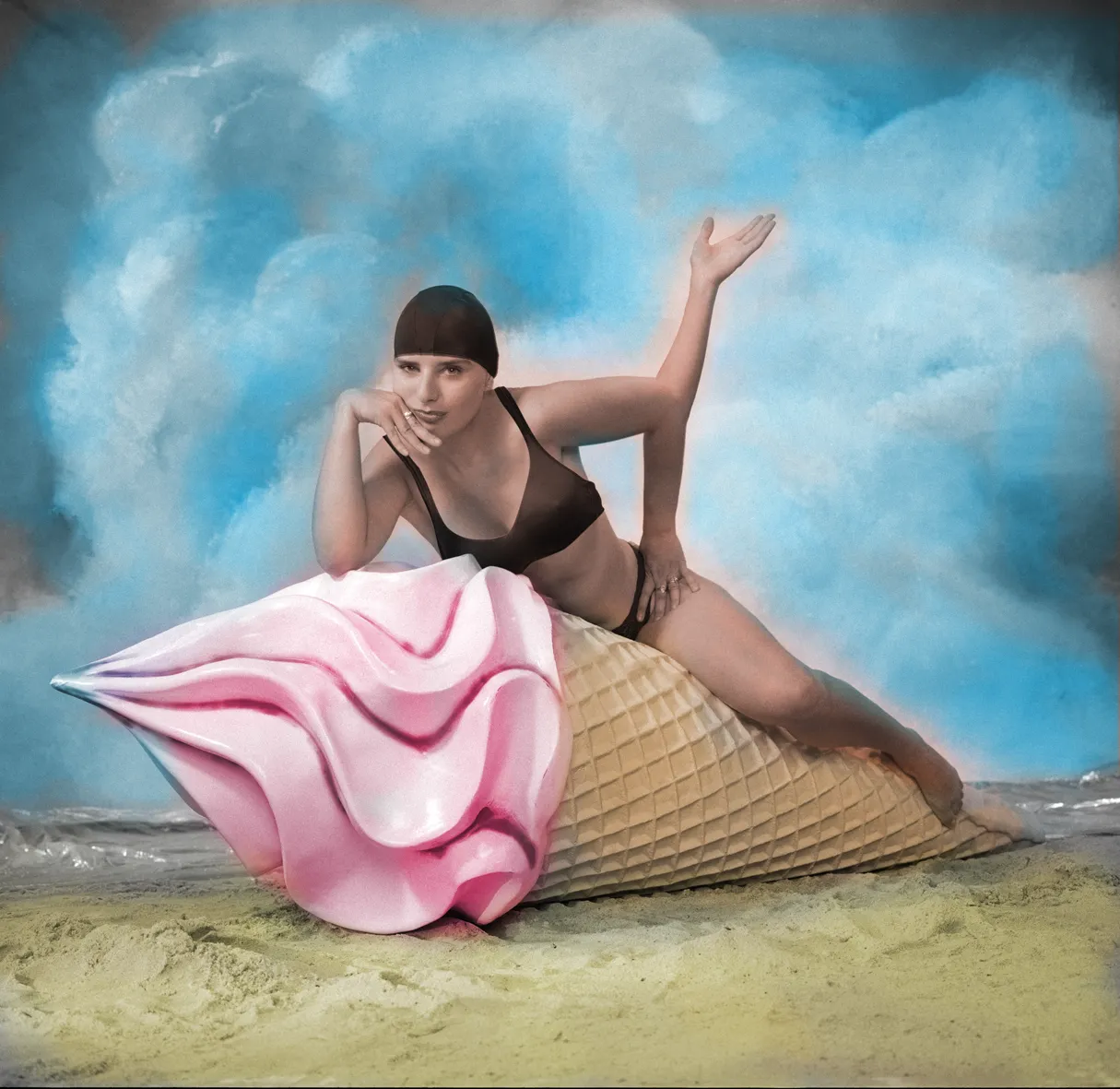
K. C.: I wonder at what point racial issues appeared in Łódź Kaliska’s work. I’m interested in when you gentlemen became so serious.
Świetlik: That frightens me. It frightens me. What frightens me is precisely that we’ll become too serious. If we impose such a highly rational mode of thought and this kind of discipline on ourselves, we’ll stop being Łódź Kaliska. That’s what worries me. And to be honest, we’ll have to confront that anxiety.
Kwiecień: It follows from the fact that art is a certain reflection of reality. Once visual reality; now social reality. Today art is exclusively social. There is no other kind. And the world’s main problems are the problems of different ways of living and intolerance. Art cannot easily avoid such subjects, and ninety per cent of art concerns precisely these themes.
K. C.: Aren’t you a little afraid that this will correspond too closely to demand? That you will be thinking in terms of need and demand. Admittedly, with New Pop you declared that you wanted to be producers facing the customer, but… are you really not afraid this will be received as Łódź Kaliska’s somewhat belated pursuit of the peloton pedalling in the socially approved direction?
Świetlik: No one has said that the exhibition will deal exclusively with serious subjects; perhaps some joyful elements will appear…
Kwiecień: Absolutely, joyful ones will appear – even in my work! I think form will play a very large role. All these serious problems, treated formally with a wink, become something entirely different.
Świetlik: Looking back, among the many joyful elements in our works one could also find entirely serious content…
Kwiecień: When we hung up the manifesto ‘We Demand Big Tits for Little Money’, it was a response to Łódź textile workers demanding bread and work.
* * *
K. C.: Why didn’t you begin with New Pop when you started out, around 1979? Pop had already been around for a long time. Why did Łódź Kaliska only notice Pop in the twenty-first century?
Świetlik: We were fascinated by something completely different then.
Kwiecień: We were strongly influenced by the structuralists, new media…
Janiak: We were freeing ourselves from Conceptualism.
Kwiecień: Our first actions were Dadaist. Yet the social context took precedence over experimental or avant-garde form. We were wrongly classified as so-called Minimalists, avant-gardists, photo-media artists and the like. In reality, that was merely a superficial layer concealing a certain human sensitivity.
Janiak: The shortest way to describe Łódź Kaliska is as the Mother Teresa of Polish art – because of our sensitivity to the social situation.
* * *
Kwiecień: Before we begin talking, I would like you to explain why, when I quarrelled with Janiak two weeks ago, you made those very unpleasant remarks.
A. W.: Gladly, but you’ll have to remind me what they were.
Kwiecień: You said we were poor artists…
Świetlik: That really wounded him…
Kwiecień: And that we didn’t understand everything, that perhaps we should do a bit more reading…
K. C.: That is some sort of programme…
A. W.: Did I say that? Don’t you agree that you should read a little more?
Kwiecień: I agree…
Makary: About China.
* * *
K. C.: Don’t you notice in your work something that often happens to artists who are nearer the end than the beginning of their artistic journey: a concern that their works should survive and their achievements be preserved? Aren’t you trying ever harder to ensure that your successive works will be eternal, or at least built to last?
Janiak: Well, we would like that. Besides, we’ve decided to sell something.
A. W.: Quite right.
K. C.: You start out with Dadaist skipping-rope, and then…
A. W.: Let’s ask ourselves whether, and to what extent, Łódź Kaliska makes compromises. When creating a new project, they have to clash. Two against three, four against one. Is agreeing on something in a group like this already a compromise, or is it a social contract? Do you ever vote?
Kwiecień: We vote, but voting on artistic matters has stunk from the very beginning.
Janiak: And then the problem comes back anyway.
* * *
K. C.: Wouldn’t it be better simply to publish your Alementarz as a book instead of filling the rooms with installations?
Świetlik: In my view, the primer is a product of the exhibition, not the other way round.
K. C.: But why? Out of habit, because you make exhibitions?
Janiak: The exhibition is an absurd way of showing a primer. Publishing a primer is fairly obvious. In this project, without dividing it into a book and an exhibition, we touch on certain fundamental problems relating to contemporary social life. The questions are sometimes so simple and elementary – something that has appeared in our work before – that it feels almost improper to ask them. The primer format is ideally suited to asking banal questions. In a sense, it absolves us; it excuses the infantile questions that everyone really asks themselves.
K. C.: I would like to understand why you don’t simply want to publish a book.
A. W.: Didn’t I tell you? Because Łódź Kaliska makes exhibitions; it doesn’t publish books.
* * *
K.C.: Aren’t you afraid that, after this socially oriented, pretty exhibition rich in primer-like, elementary banalities, people will start confusing Łódź Kaliska with the Ładnie Group?
Kwiecień: Andrzej is terribly afraid that this will happen – that it will end up as pictures with captions. I’m worried that Rzepa’s and Janiak’s works are heading in that direction. With Alementarz the dividing line is so very thin; I’m afraid of it too.

Świetlik: We mustn’t worry too much about that, or we won’t be able to do anything.
* * *
K. C.: This will probably be the first time you photograph mannequins rather than people or muses?
Świetlik: That’s true.
K. C.: Cardboard figures had already appeared in Chinese People Watching an Advertisement….
Świetlik: We had sometimes used objects before as well, but in Alementarz photographs of figures will indeed appear for the first time. However you look at them, they will be a political allegory. They will be images of real people. The male figure is based on Magic. He lived in Łódź, where he had come from Algeria to study. He received Polish citizenship. Then, a year and a half ago, like a true Pole, he emigrated to London in search of work. Kwiecień and I once took photographs of him, and the male figure has his facial features.
K. C.: Does he know?
Świetlik: Of course!
K.C.: And Ala?
Świetlik: Ala is Chinese. She is based on a Chinese woman living in Warsaw who married a Pole. Sculptures of the faces were made from photographs of her and Magic.
K. C.: They aren’t computer animations or casts?
Świetlik: No, they are sculptures made from photographs.
K. C.: Who made them?
Świetlik: A sculptor from Łódź.
K. C.: So you have a whole army of subcontractors!
Świetlik: Not an army, but there are several.
* * *
K. C.: Will each of you have an individual work of your own in Alementarz?
Świetlik: Yes. And there will be joint works too. They matter inasmuch as, for example, my way of thinking is so different from Kwiecień’s that when the two are combined…
K. C.: The result might be something as strange as art?
Świetlik: God knows; I’m not sure.
Kwiecień: Andrzej is my most important partner because he is a visualist. He starts with a form into which he tries to insert content. I, of course, do the opposite. The result of our endless discussions about which is more important, the chicken or the egg, is not compromise but added value. Visualism is the foundation of the visual arts, while starting with content and searching for a form for it can often be a path that leads us astray, because it restricts the image’s freedom. Until now it worked like this – something Janiak constantly accused me of – that he would construct certain things in Łódź Kaliska and I would immediately deconstruct them. And that was good! Now Świetlik accuses me of becoming too constructive. Usually, as we made the works, everything would begin to fit together like Lego bricks. And then I would always say that, if we were to remain Łódź Kaliska, we had to remove one brick. Otherwise we would soon stop being ourselves and become Roman Opałka.
Świetlik: All the confusion arises from the fact that, for the first time in our history, the exhibition is preceded by such a very precise conceptual framework.
* * *
K. C.: A month and a half before the Alementarz exhibition, do you already know what it will look like?
Janiak.: I have a clear and lucid vision of the exhibition’s message and appearance. My colleagues, however, keep changing things.
K. C.: How many works do you have that are already settled and approved by vote?
Janiak: Yes, there was a vote! Then it turned out that works approved in the vote had been changed or withdrawn by their authors. It is quite an interesting situation: the organisational impossibility of bringing it all under control. But I’m not complaining. I love the element of improvisation in the creation of art. Without it, there is no art! I hate the laborious, one-hundred-per-cent execution of an adopted script.
K. C.: A vote like that is surely not improvisation but legalisation and legislation.
Janiak: When the votes collapse, improvisation appears at a certain point because there is no time for another vote. The exhibition begins to be shaped by new facts; in this way, instead of legislation, we have improvisation.
K. C.: So it will be as it has always been. What ‘comes out’ will be shown, rather than what you vote on and discuss.
Janiak: The element of ‘what comes out’ has always been very important in our work. The film Shoes, which followed Kwietniewski’s fairly precise script, was a failure because carrying it out consistently, without the possibility of responding to what happened, caused the whole thing to break down. Our works – at least those in which I take part – must include this element of yielding to the pressure of the situation, chance and moods. Then the work is creative, genuinely inventive: you have to respond and construct continually rather than merely complete a task. New contexts emerge.
A. W.: Are your methods of throwing out the dregs the same in your art and your lives?
Janiak: Not throwing them out, accepting them! This differs among the members of Łódź Kaliska. In art I do what I am unable or unwilling to do in life. Art is a battlefield in the struggle against my own consistency. Freedom and surrendering to chance can become my share. In life it happens to me less often. In my view, Kwietniewski behaves in art as he does in life. He can cross everything out; every five minutes, or every few years, he changes everything in relation to the adopted premises. In this group, I am the consistent one. Kwietniewski is a destructive little imp. Until now, this has complemented things well. Sometimes I was furious – when works were destroyed or strategies of action completely reversed. But once things had settled and there was nothing more that could be done, I looked for meaning in it. In the end I was satisfied. Working in art taught me to accept what is difficult to accept.
* * *
A. W.: Your activities have brushed up against politics several times. Are you all of the same political persuasion? Did you vote for the same president?
Janiak: I’ve no idea.
A. W.: You don’t know? You don’t talk about it?
Janiak: No. It doesn’t interest us at all. Politics is disgusting.
K. C.: Just like art, then…
Janiak: I disagree!
A. W.: Business is better. Business is honest and, so to speak, proper. Art, criticism and politics decidedly aren’t.
Janiak: As far from politics as possible…
K. C.: As far from art as possible, as far from business as possible. What does that leave us?
Janiak: Business might even be enjoyable. Unfortunately, we’ve had nothing to do with it. I have absolutely no talent for business…
K. C.: You, such a demon of consistency?
Janiak: Kwiecień even less so. None of us will ever be a businessman; there’s no chance. The same goes for becoming a politician. Through my activity in the social sphere I brush against politics, but I hate the political world. At every level. I also hate art that serves politics.
K. C.: Wait a moment. All this socially oriented, sensitive art doesn’t differ much from political activity, which is supposedly activity for the common good. Artists tell us the same thing. Take Łódź Kaliska, supposedly the Mother Teresa of Polish art because of its social sensitivity. How does that differ from declarations made in the political sphere?
Janiak: In every respect!
* * *
K. C.: Have you ever got carried away, discussed and voted on something, only for nothing to come of it? Once you begin making something, does something always emerge? Even if it changes a little, so much the better, because new meanings and contexts arise.
Janiak: Many times. The film Shoes, for example. It was something that was supposedly completed, but the amount of energy that went into it was completely out of proportion to the result. It didn’t work.
A. W.: If anything of theirs failed, it was because of laziness. I know, because I was there for several of their ‘failures’. Laziness, sheer laziness. They couldn’t be bothered!
Janiak: Chance, too. One very important principle has guided Łódź Kaliska ever since we became conscious of it: that we act according to our own conscience. ‘Conscience’ should be understood rather broadly. It isn’t merely an inner voice telling us what we disagree with…
K. C.: How can five grown men act according to a single conscience?
Janiak: Our own consciences, not one conscience.
K. C.: You really could talk yourselves to death one day, never mind the votes…
Janiak: No. It is decided by one’s ability to persuade the others. There is an old saying that everyone can exploit a group to the extent that the group allows itself to be exploited. That is absolutely true.
* * *
A. W.: They once told me I was the missing element of Łódź Kaliska.
Janiak: Yes. We wanted to admit him.
A. W.: For many reasons, of course, I didn’t want to belong to them, but just in case I financed one work and made it. That was when I learnt their working methods. Everyone gets together and the most important thing is making arrangements. ‘Something will get done’, ‘it’ll happen’, ‘it’ll be there’, ‘it’ll get finished’. Everyone arrived and immediately left again, while I stood alone by the camera…
Janiak: I beg your pardon, the others went into the next room and drank wine. And we did all the work.
K.C.: Cheap wine?
Janiak: Dry white.
A. W.: The work consisted of no one having the slightest idea what it was about. Perhaps one lady alone knew…
Janiak: I would like to deny those rumours. I knew exactly what it was about. I consider the work very good. So highly refined conceptually that the nation still hasn’t understood it. Not even the members of Łódź Kaliska. Please emphasise that. But there was indeed a period when we would meet with only a general outline, an idea for the undertaking as a whole. Then, during its realisation, material effects arose through improvisation. The improvisation included the reactions of group members and of the people accompanying us: models, the cleaner, the man who delivered the pizzas. The man delivering the pizzas could tip the balance one way or the other. It is a method we often use. It is a fantastic method.
K. C.: Can this way of proceeding be transferred to an area outside art – business, for example?
Janiak: I don’t think so.
K. C.: And why ever not?
Janiak: Because art, in its most important dimension – that of coming into being and creation, of responding to the whole world without concerning itself with its subsequent dissemination – is a space that serves as an experimental field, as broad as the artist wishes to experiment. Art provides a kind of quotation mark that allows us to do things we cannot do in social life, because society would kill and devour us. But when we draw back the curtain and say, ‘we’re making art’, the social order permits far more. Sometimes it fails to understand what it has allowed, and only later imposes bans, creates obstacles and invents forms of repression…
K. C.: It follows that you are men who parasitise art’s still-elevated social connotations. Art’s position is declining through continual provocation and experimentation with norms and their transgression, but it remains high enough to give you a kind of immunity…
Janiak: Well, I must tell the editor that, to put it briefly, I couldn’t give a sh… about that way of looking at things. I have no interest whatsoever in the social dissemination of art, only in its creative element…
K. C.: Just a moment! Do you put on exhibitions without an audience? Do you get together, make something and show it to no one?
Janiak: No.
K. C.: Then how can you say you aren’t interested in disseminating art?
Janiak: Whether crowds come or five people, in reality…
K. C.: It doesn’t matter much, although it does…
Janiak: It doesn’t matter much, although it does, because everyone is vain and foolish. Łódź Kaliska too. It is a natural trait, and one we fought for, as it happens. I’m talking about the individual’s right to weakness. I oppose confusing the problem of creating art with the problem of disseminating and promoting it.
* * *
K. C.: I have the impression that this conversation reveals more about the way Atlas Sztuki operates than about Łódź Kaliska, so I would like to ask for some enlightened advice. Can a place that shows and disseminates art be run according to the same principles by which art is practised? Can dissemination and creation use the same method? Would you be capable of running such a place on the basis of your own conscience and pure creativity, without looking to its reception?
Janiak: A gallery?
A. W.: We would gladly commission you to work out what could be done to increase attendance at Atlas Sztuki’s exhibitions, at least to the level enjoyed by Łódź Kaliska.
K. C.: What can we do, insofar as it is possible in good conscience, to increase our attendance figures?
Janiak: If I were to answer seriously – as seriously as the serious institution Atlas Sztuki is – I don’t know. I have no recipe. We never wanted to concern ourselves with exhibition-making.
A. W.: That is what we do.
K. C.: It would also be difficult to say we always wanted to do it.
A. W.: In fact, we didn’t particularly want to do it, but somehow it happened, and now we’re asking for some good advice.
Janiak: Listen, I am absolutely opposed to giving advice…
A.W.: And to Atlas Sztuki and exhibition-making…
Janiak: Yes. No! I am opposed to giving advice to Atlas Sztuki, because exhibition-making, like artistic creation, means accepting a certain risk in doing something according to one’s own model. When we ran Strych during martial law, it was a manifestation of a certain independent being, an independent life. We didn’t give a damn about either the political system or the other system – the Church – which also exhibited art at the time. In all that political confusion, we charted our own course, in which art and independence from everything were paramount. We believed that political opposition was merely incidental, that it had short legs and would soon end. Social opposition, however – the development of a field of freedom that was not political, but social and one’s own – is immortal. Always. Whether under socialism or capitalism, including now. Defence against the aggression of society, however it may be structured, is the most important thing. And that freedom matters most, not political freedom or who is in power. Today it is Mr Kazio, and in a moment it will be Mr Czesio. One has this banner, the other will have another. It makes no difference. The model at Strych was that anyone could come who accepted a certain nihilism towards the noble social determinants represented – as it seemed then – by the Church, and the shitty ones represented by the police state. They came and did whatever they wanted.
K. C.: Did clergy ever visit you?
Janiak: It happened.
K.C.: And the militia officers were probably in plain clothes…
Janiak: Probably more often. If either group appeared, they came in plain clothes. There was an openness to accepting whatever might happen. It was a kind of dumping ground for events. The wonder of the place at that time lay in the fact that Poland did not have many places like it. Things were very heavily censored either by the state or by the Church. But this complete freedom – that someone could come and do this or that, and it would be watched and accepted – worked. It was an intoxication with freedom. There was a risk that someone might do something stupid, overturn a table onto everybody, that the event’s scenario might fail, and so on. But the balance was positive. A great deal of creativity appeared there. That, to me, is the model for a gallery: one thousand per cent openness.
K.C.: But it’s harder for us, because now you can ‘get drunk’ on freedom everywhere…
Janiak: Where? That isn’t true. You cannot get drunk on it at all; that freedom does not exist everywhere. I have experienced this myself in recent years. There is a very restrictive system towards art too.
A.W.: What do you mean by freedom?
K. C.: Freedom of choice. In New Pop terms: how many television channels I have and the fact that I can travel anywhere.
A. W.: The more channels, the greater the freedom?
Janiak.: In Shoes we ask people about freedom: ‘What is freedom?’ The definition I agree with most was given by Piotrek Bikont. He said freedom – true freedom – is the comfort of not having to bear the consequences of one’s own decisions, whatever those decisions may be. And I agree with him.
K. C.: And was Strych really such a place? You overturned the table, but we’ll take responsibility?
Janiak: Yes. Somehow it will blow over. That is how it was. At times it led to conflicts or even fights, but those too were part of the package. Because a fight is cathartic.
K. C.: I wonder when corporations will start using such a method instead of team-building trips. The only thing I remember from that speech as advice for us is ‘a dumping ground for events’.
Janiak: ‘A dumping ground for events’ is a good definition.
K. C.: But a little too broad. What should we do? How should we live and exhibit?
Janiak: The problem of risk and bearing the consequences is the same. So in truth, you have to define it yourselves.
A. W.: What bothers you most about Atlas Sztuki?
Janiak: That isn’t important. What matters is that Atlas Sztuki is a cultural institution that doesn’t constantly whinge about financial difficulties, because all the others do.
K.C.: That’s something already.
* * *
Janiak: I’ll tell you why I like Atlas Sztuki.
K. C.: Oh no.
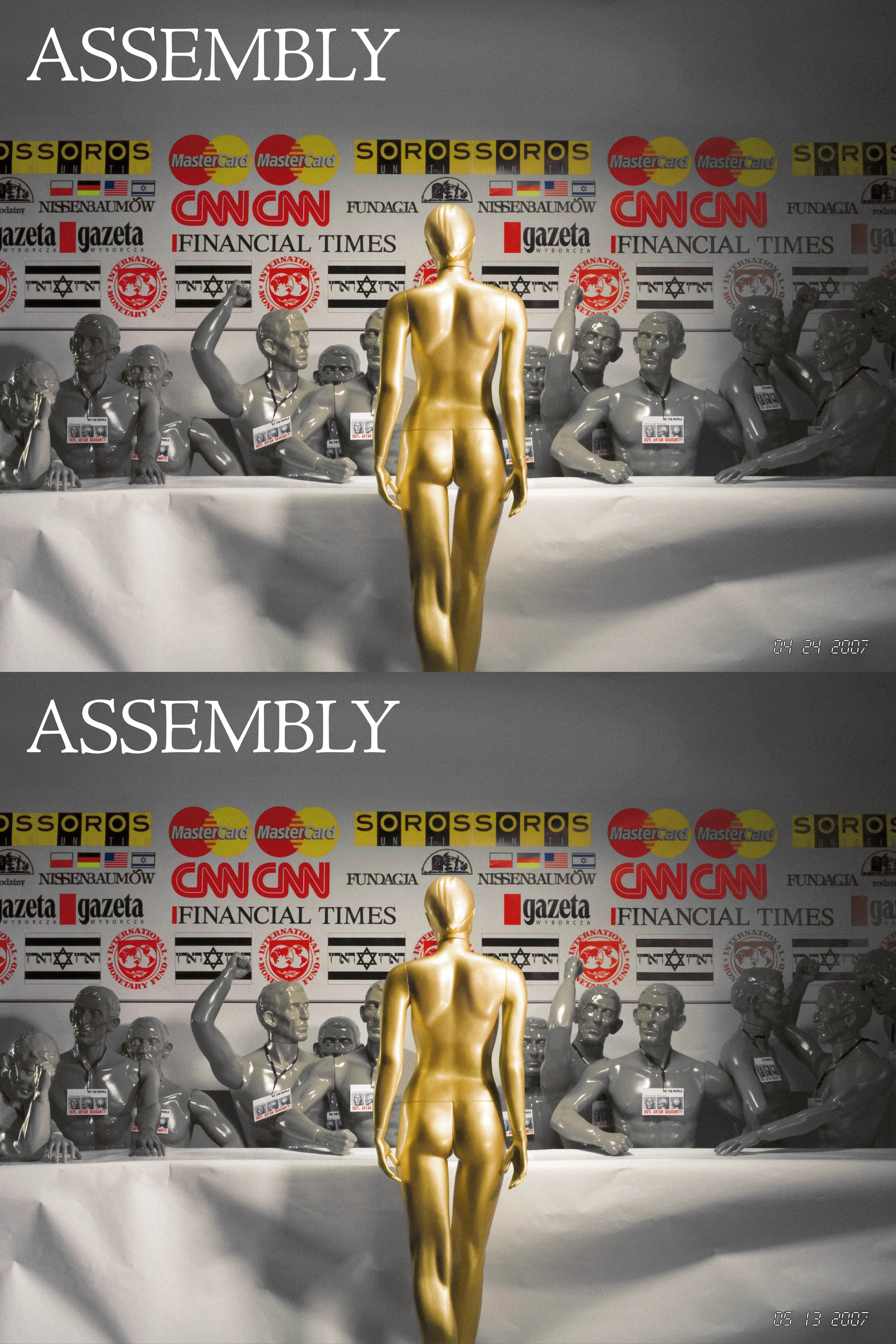
Janiak: Well, then I won’t tell you. I will tell you, though, what concerns me about the present model for disseminating art. It has always pissed me off, and now it has reached astronomical proportions. That’s why I loved Strych, because this element didn’t exist there at all. I’m thinking of the role of the agencies and people who service artists: curators, directors of museums and galleries, and people who write about art. In the days of Strych and 1970s Conceptualism, this caste practically did not exist. If someone was an organiser or gallerist, they were an artist themselves – the Lachowiczes, Brogowski. At that time critics and historians could not keep up with the artists, who were themselves critics and art historians. Those conventional, descriptive critics were always late, because the artists described themselves. It was a beautiful period. Today the situation is completely reversed; we have the other end of the stick – curators decide everything, and artists…
K. C.: Are late…
Janiak: I don’t know if they are late. They are a kind of producer whose offer these organisers may or may not take up. The organisers decide everything, compose exhibitions for themselves, invent themes and put things on the market. Artists are pawns in a game. So many of them create so many different things that, by taking one, another and a third, you can compose any statement you like. I quite obviously find that terrifying. Recently I visited large art fairs in Cologne, Vienna and Paris, and I can honestly say that they are events populated solely by this world that services art. A curator dreams up one theme or another: irreligion or atheism. Various concepts to which artists are fitted, different artistic statements ripped out of context – the artistic work is, in a sense, manipulated.
K.C.: Perhaps it is only a question of who does the manipulating. If an artist had thought up atheism…
Janiak: No, a critic thought that up.
K. C.: And if an artist had thought it up, would that be all right? Why should the privilege of ‘invention’ and manipulation – which, in technical terms, is what a large part of art after Conceptualism amounts to – belong only to ‘artists’?
Janiak: I’m not talking about the privilege of invention, but about responsibility. It doesn’t mean taking one hundred per cent of the risk and deciding on a million details of the work; it means taking ready-made statements and composing from them. It is a kind of parasitism.
* * *
A. W.: We wanted to go even further with you. We wanted parliament finally to define precisely where art begins and where it ends.
Janiak: Rules. What is art and what is not.
K. C.: With some truly fundamental act of parliament. It is a scandal that a serious country of forty million people has no such regulations.
A.W.: And we hoped you might bring that about. Take on this legislative burden – and instead you come to us with Alementarz.
Janiak: I have an immediate proposal: since the act is to concern taste, it should exceptionally be called a gustawa. One could cite the gustawa.
K. C.: Many important things begin with that letter…
A. W.: Gustawa of 15 August. I was deeply upset that you, as Łódź Kaliska, didn’t become a senator. Because we very much hoped you would introduce into parliament…
K. C.: That efficient procedure, practised so many times by Łódź Kaliska, of voting on important matters.
A. W.: And at the same time we already know full well that the voting goes one way and the action another. That really would translate perfectly. I would fit into that model painlessly. I was aware of it. The same goes for my entering a competition.
A. W.: We will always ask about attendance now. We must get something from you artists.
K. C.: Perhaps someone will finally give us some advice.
Janiak: When we made the film with Greenberg at Burning Man, attendance became an issue there. We pointed and said, ‘Film that: increased attendance is riding a bicycle. Attendance is standing there.’ There were masses of beautiful naked women. The particularly talented ones increase cinema attendance. That is beyond dispute. I don’t know whether it would work in a gallery. I would give it a try.
K. C.: I think it would work.
A. W.: At last we could introduce tickets.
Janiak: But cheap ones!
K. C.: You’re returning to the old slogan: ‘We Demand Big Tits for Little Money’.
Janiak: That is the dream of every member of society. Everyone would like to be clever enough in relation to everyone else to get something fantastic with little effort. For little money.
K. C.: I think our collective effort has finally moved this interview forward.